[작성자:] 편집팀

  • 10 Emergency Fund Math for 20s: Calculate Your Freedom Number

    In our previous critical analysis of the Federal Student Loan Changes, we exposed how sudden legislative shifts can quickly drive unsuspecting students into predatory high-interest credit lines. When you navigate a modern economy characterized by systemic inflation and volatile employment markets, unexpected financial disruptions are not a matter of “if,” but “when.” A sudden vehicle breakdown, a dental emergency, or a sudden change in lease terms can instantly throw your financial survival into chaos.

    Without a dedicated, strategic pool of liquid capital to absorb these shocks, you are completely defenseless, forcing you to rely on expensive commercial debt to survive. To secure your lifelong economic sovereignty, you must master the mechanics of Emergency Fund Math for 20s, establishing a dedicated financial barrier that permanently insulates your life from systemic disruption.

    “A liquid emergency fund is not a low-yield savings project; it is a paid-in-full insurance policy protecting your personal sovereignty. When you have cash reserves, an emergency is merely an inconvenience.”

    The Survival Blueprint: Why Cash Reserves Dictate Your Freedom

    Many young adults view saving money as a restrictive chore that limits their active lifestyle. This is a fundamental conceptual error. In reality, savings represent your absolute leverage over the corporate system.

    When you possess zero cash reserves, you are a hostage to your current employer, forced to accept low wages, toxic work conditions, and unstable hours simply because you are one missed paycheck away from immediate eviction.

    A robust emergency fund is your “freedom fund.” It grants you the economic leverage to walk away from predatory employment, reject unfair housing conditions, and negotiate your career path on your own terms.

    You must stop measuring your wealth by the digital consumer items you purchase, and start measuring it by the amount of time you can buy for yourself if your primary income stream suddenly evaporates.

    The Math of Freedom: Calculating Your Baseline Living Number

    To construct an effective emergency fund, you must completely ignore the generic, unvetted advice of traditional financial networks telling you to arbitrarily save a flat $1,000 or a random percentage of your income.

    Instead, you must calculate your precise Baseline Living Number (BLN).

    Your BLN represents the absolute minimum amount of cash required to keep your body sheltered, fed, and legally compliant for exactly 30 days if your income drops to zero.

    To calculate your BLN, you must strip away all non-essential expenditures—including subscription services, restaurant dining, gym memberships, and discretionary shopping.

    Your BLN consists solely of four non-negotiable categories:

    • Shelter & Utilities: Your baseline rent, renters insurance, electricity, water, and basic internet access.

    • Food & Health: Standard groceries and essential medical prescriptions (excluding luxury dining).

    • Sovereign Debt Obligations: Minimum required payments on student loans or credit cards to protect your FICO score from immediate destruction.

    • Essential Transportation: Basic transit fare or fuel and auto insurance required to remain operationally mobile.

    Once you calculate your BLN, your immediate strategic objective is to assemble a Three-Month Survival Buffer. If your BLN is exactly $2,000 a month, your targeted emergency fund is $6,000.

    While some traditional financial advisors recommend a six-month fund, a three-month buffer is the ideal sweet spot for active young adults, allowing you to quickly redirect your excess cash flow into the high-yield investment structures we analyzed in our foundational guide on the Roth IRA.

    A vibrant pop-art infographic with neon pink and volt lemon accents illustrating the emergency fund math strategy.
    Calculating a precise Baseline Living Number and securing a three-month cash reserve protects young adults from high-interest debt traps.

    Strategic Capital Placement: Bypassing the Inflation Tax

    Once you accumulate your survival buffer, you must never allow it to sit inside a traditional brick-and-mortar bank account where its value will be slowly devoured by the inflation tax.

    At the same time, you cannot invest your emergency fund in high-yield mutual funds or volatile stock portfolios, as a sudden market downturn can easily slice your capital in half at the exact moment you need to access it.

    You must split your emergency fund into two distinct, highly secure liquid zones:

    The first zone holds one month of your BLN directly inside a high-yield savings account linked to your primary checking account. This ensures you maintain instant 24-hour liquidity via mobile transfer to cover immediate, minor emergencies.

    The second zone holds the remaining two months of your buffer in ultra-short-term U.S. Treasury Bills (T-Bills) or highly liquid money market funds. These federal backing structures pay highly competitive yields, keeping your emergency cash insulated from the erosion of purchasing power while maintaining total capital safety.

    Conclusion: Secure Your Financial Sanctuary

    Ultimately, establishing a precise, math-driven emergency fund is your final act of defense in the war for economic independence. The modern administrative state and predatory credit cartels count on your financial vulnerability to keep you dependent on their debt cycles. By calculating your exact baseline, securing a three-month cash barrier, and parking your wealth within high-yield, secure environments, you build a financial sanctuary that protects your sovereign right to make your own economic choices.


  • 9 Federal Student Loan Changes: Avoid the 2026 Credit Card Trap

    In our previous session on the Roth IRA at Age 18 blueprint, we analyzed how to build a sovereign, tax-free compounding engine to protect your long-term wealth. But as you construct your long-term defense, a sudden, massive regulatory shift has just detonated inside the American higher education system. Effective July 1, 2026, the federal government has officially implemented the most drastic structural overhaul to student financing in a generation. Driven by legislative mandates, these sweeping Federal Student Loan Changes have instantly eliminated critical borrowing avenues and placed hard caps on federal education funding.

    The immediate, unvarnished consequence on the ground is a financial emergency. Unable to bridge the sudden funding gap, millions of college students and young adults are being systematically driven into the arms of predatory credit card companies, trading government debt for compounding credit card interest rates that currently average a brutal 21.5% APR.

    “When the state abruptly cuts off access to public student aid under the guise of fiscal responsibility, it does not lower the cost of college; it merely forces young Americans to fund their degrees using high-interest commercial debt.”

    The July 2026 Funding Crash: What Just Changed?

    To survive this sudden financial transition, you must understand the exact boundaries of the new legislation. For decades, the federal student loan framework had virtually no upper borrowing limits for graduate students and parents. Under the legacy Grad PLUS and Parent PLUS programs, families could legally borrow up to the entire “Cost of Attendance” determined by the university, regardless of how high that price tag was.

    This open-ended credit spigot has been permanently shut down. Under the newly enacted 2026 federal guidelines:

    • Graduate PLUS Loans are completely eliminated for all new borrowers entering the university system.

    • Parent PLUS Loans are strictly capped at a maximum of $20,000 per fiscal year, with an absolute lifetime borrowing ceiling of $65,000 per student.

    • Total lifetime federal loan caps across undergraduate and graduate careers combined have been locked at a maximum of $257,500.

    While political administrators claim these limits are designed to contain the national student debt bubble, the timing is catastrophic. Tuition rates for the upcoming academic semester have already been locked in. Students who relied on federal backing to cover their remaining balances are finding themselves short by thousands of dollars, with only weeks left before classes begin.

    The Commercial Debt Trap: Bypassing Federal Protections

    With traditional federal loan options suddenly restricted, major commercial credit card issuers and unregulated fintech syndicates have launched massive, predatory marketing campaigns targeting stranded young adults. They are offering instant-approval credit lines and “Buy Now, Pay Later” (BNPL) education payment plans as easy fixes to cover tuition deficits.

    This is a highly dangerous trap. Unlike federal student loans—which offer flexible income-driven repayment plans, interest-free subsidized periods, and legal deferment shields—commercial credit cards carry no consumer protections.

    If you put your remaining tuition balance on a standard credit card, you are immediately exposed to interest rates exceeding 21.5% APR. Under these commercial terms, a minor $5,000 tuition gap can easily snowball into over $12,000 of high-interest debt within a few short billing cycles, permanently crippling your credit profile before you even graduate.

    The Strategic Shield: Navigating the 2026 Funding Gap Safely

    If the new federal loan caps have left you or your family with an unresolved tuition balance, you must absolutely refuse to use credit cards, personal loans, or high-interest commercial lines of credit. Instead, deploy this defensive strategy to bridge the gap without compromising your financial sovereignty:

    First, immediately contact your university’s Financial Aid Office to request an official Professional Judgment Review. Under federal guidelines, financial aid administrators possess the legal authority to override standard FAFSA data and increase your institutional grant aid if your family has experienced a sudden change in financial circumstances, such as job loss, medical expenses, or the direct impact of the new federal borrowing limits.

    Second, if secondary financing is absolutely mandatory, bypass commercial credit card offers entirely and seek out specialized non-profit student lending networks or regional credit unions. These community-oriented institutions routinely offer educational lines of credit capped at single-digit interest rates, complete with structured repayment grace periods that mirror traditional federal protections.

    A vibrant pop-art infographic with neon pink and volt lemon accents illustrating the 2026 federal student loan changes.
    The sweeping July 2026 changes to federal student loan programs are forcing many young adults to navigate highly predatory commercial credit alternatives.

    Conclusion: Reclaim Sovereign Control Over Your Education

    Ultimately, the July 2026 Federal Student Loan Changes expose a fundamental truth: the modern administrative state is entirely willing to collateralize the economic mobility of the younger generation to balance its institutional ledgers. True financial independence requires you to treat the higher education system with absolute skepticism. By refusing to bridge regulatory funding gaps with high-interest commercial credit cards, aggressively demanding institutional tuition discounts, and preserving your liquid savings, you protect your sovereign financial future from the claws of the credit cartel.

  • 8 Roth IRA at Age 18: Build Tax-Free Wealth from Scratch

    In our previous session on The High-Yield Savings Account Trap, we dissected how to build a highly secure liquidity bridge to maximize your short-term cash interest. But as you establish a steady flow of liquid savings, you must lift your eyes to the horizon. Building short-term interest is excellent for emergencies, but it will never make you truly wealthy. To build sovereign, multi-generational wealth, you must transition from a simple saver into an active, strategic investor.

    The biggest predator waiting to consume your investment returns is not market volatility; it is the Internal Revenue Service (IRS). Every time you sell a stock for a profit or receive a dividend in a standard brokerage account, the government takes a significant cut of your success. To stop this legal wealth extraction, you must open a specialized tax shield. By understanding the operational rules of a Roth IRA at Age 18, young adults can build a completely tax-free compounding engine that keeps 100% of their investment growth safe from federal reach.

    “A standard brokerage account is a shared business venture where the government acts as a silent partner who only shows up to collect profits. A Roth IRA is your private financial fortress.”

    The Ultimate Tax Shield: How a Roth IRA Works

    To appreciate the immense power of a Roth IRA, you must understand the basic philosophy of taxation on capital. In a traditional investment account, you pay taxes on your contributions today, and then you pay capital gains taxes on your profits tomorrow when you withdraw the money. This means if you invest $5,000 today, and it grows into $50,000 over thirty years, you must pay taxes on that $45,000 gain.

    A Roth IRA completely flips this math in your favor.

    With a Roth IRA, you make contributions using after-tax dollars—meaning money you have already paid taxes on through your regular paycheck. Once your cash enters the Roth IRA, it undergoes a permanent legal transformation. Every single dollar of investment growth, stock appreciation, and compounding dividend payout accumulates in total silence.

    When you reach age 59.5, you can withdraw that entire balance—whether it has grown to $500,000 or $5,000,000—completely tax-free. The IRS is legally barred from touching a single penny.

    The True Superpower of Youth: The Compounding Calculus

    Many eighteen-year-olds refuse to think about retirement accounts, assuming that fifty years in the future is too distant to matter. This is a tragic misunderstanding of exponential math. The most valuable asset you possess at age eighteen is not cash; it is time.

    Consider this mathematical reality:

    If you start contributing just $100 a month into a Roth IRA at age 18, assuming a standard 8% average annual market return, your account will swell to over $500,000 by the time you retire.

    However, if you wait until age 28 to start saving that exact same $100 a month, your final balance will barely cross $220,000. That simple ten-year delay—doing absolutely nothing different other than waiting—costs you over $280,000 in lost compounding growth.

    By taking action the moment you reach legal adulthood, you force time to do the heavy lifting for you, building a massive safety net while you focus on your career.

    A professional infographic with gold and electric purple accents illustrating the Roth IRA investment strategy for young adults.
    Utilizing a Roth IRA allows young adults to grow their investment assets in a completely tax-free environment, bypassing capital gains taxes.

    The Earned Income Rule: The Legal Boundary of the IRS

    You cannot simply deposit random piles of cash into a Roth IRA. The federal government is fully aware of how powerful this tax shield is, so they have established strict operational boundaries to prevent wealthy families from abusing it.

    The most important boundary is the Earned Income Rule.

    To contribute to a Roth IRA, you must have documented, taxable compensation in the current fiscal year. This includes wages from a traditional W-2 job, tips, or self-employment income from a 1099 side gig.

    You cannot contribute money received from passive sources like inheritance, personal gifts from parents, or regular stock market gains.

    Furthermore, you are legally restricted from contributing more than your actual earned income for the year, up to the official annual contribution limit. For the 2026 tax year, the maximum annual contribution limit is $7,500 for individuals under the age of 50. If you earn $3,000 working a part-time summer job, your maximum legal Roth IRA contribution for that year is exactly $3,000.

    Complete Flexibility: Your Penalty-Free Exit Hatch

    The second biggest myth surrounding retirement accounts is that your money is permanently locked away, leaving you financially vulnerable in an emergency. While this is true for traditional pension plans and traditional 401k structures, a Roth IRA offers unparalleled operational flexibility.

    Under IRS codes, you are legally allowed to withdraw your original contributions (the actual cash you deposited) at any time, for any reason, with zero taxes and zero penalties.

    Because you have already paid income tax on that money, it remains yours to control. Only the investment earnings (the profits generated by your contributions) must remain untouched until retirement to avoid penalties.

    This means your Roth IRA can simultaneously function as a secondary, long-term emergency fund. If you ever face an extreme financial crisis, you can claw back your original capital without facing a predatory government fee.

    Conclusion: Seize Your Long-Term Financial Sovereignty

    Ultimately, opening a Roth IRA at age 18 is an act of defiance against a tax system designed to continuously extract wealth from the working class. The traditional financial industry wants you to engage in high-risk stock trading and speculative ventures, keeping your capital volatile and heavily taxed. By utilizing the legal boundaries of the Roth IRA, committing to consistent monthly index fund investing, and letting the exponential power of compounding run its course over decades, you secure your long-term economic independence, ensuring that the fruits of your labor remain entirely in your own hands.

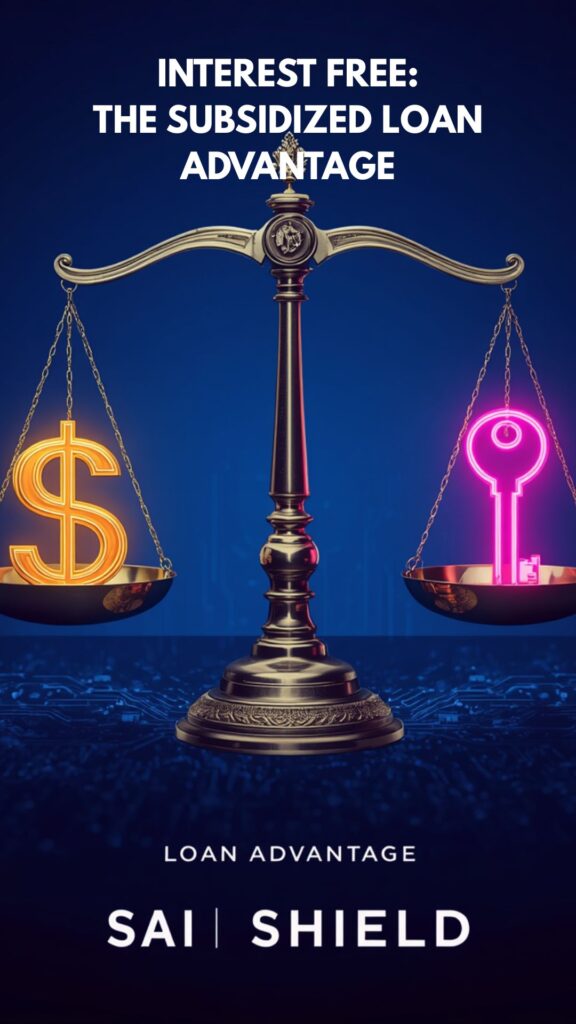
  • 6 The Subsidized Loan Advantage: How to Qualify for Interest-Free Loans

    In our previous session on Student Loan Debt Demystified, we uncovered the brutal mathematical reality of interest capitalization and how default can paralyze your financial future. Now that you understand the rules of the debt matrix, it is time to deploy your first offensive strategy. When funding your higher education, you must never accept high-interest, unsubsidized loans that accumulate debt while you sit in a lecture hall. Instead, your primary strategic objective is to secure The Subsidized Loan Advantage. By understanding how the federal government evaluates family finances, parents and students can legally position their assets to qualify for interest-free loans, saving tens of thousands of dollars in compounding interest charges.

    “The federal financial aid system is not a lottery; it is a rigid mathematical formula. If you know which assets the government ignores, you can legally maximize your aid eligibility.”

    The Subsidized Dream: Why Federal Backing is King

    To win the financial aid game, you must understand why a Direct Subsidized Loan is the ultimate form of student financing. With a subsidized loan, the U.S. Department of Education acts as your financial shield. They pay 100% of the accrued interest on your loan while you are enrolled in school at least half-time, during your post-graduation six-month grace period, and during any approved periods of deferment.

    This means if you borrow $25,000 in subsidized loans over four years, your total outstanding balance on graduation day is exactly $25,000.

    Compare this to an unsubsidized loan, where daily interest compounding can easily inflate that same $25,000 balance to $32,000 before you even receive your diploma. Securing the subsidized version is not just a preference—it is a critical wealth preservation strategy.

    The Formula of Need: Demystifying the Student Aid Index (SAI)

    To award subsidized loans, the federal government uses the FAFSA database to calculate your financial need. The formula is simple: Cost of Attendance (COA) – Student Aid Index (SAI) = Financial Need.

    The Cost of Attendance is determined by your chosen university, meaning your only variable is the Student Aid Index (SAI)—formerly known as the Expected Family Contribution (EFC).

    The lower your family’s SAI, the more subsidized, interest-free money the government will award you. Many middle-class families assume they make too much money to qualify, blindly submitting their FAFSA without any preparation. This is a costly mistake. The FAFSA algorithm does not look at your total net worth; it only looks at specific, declared assets. By legally shielding your wealth within government-approved safe havens, you can dramatically lower your SAI.

    The Asset Shield: Where to Park Family Wealth Before Filing FAFSA

    The federal financial aid formula contains deliberate, legal loopholes designed to protect retirement and primary real estate.

    To maximize your eligibility for subsidized loans, you must understand which assets are counted by the government and which ones are completely ignored:

    Asset Category FAFSA Formula Treatment How It Impacts Your SAI Score The Strategic Wealth Placement
    Primary Residence Equity COMPLETELY EXEMPT $0 impact on SAI, regardless of how much your family home is worth. Pay down your primary home mortgage to legally lower your liquid cash reserves.
    Retirement Accounts (401k/IRA) COMPLETELY EXEMPT Existing balances in qualified retirement accounts are ignored by FAFSA. Max out your parent’s 401k and Traditional/Roth IRA contributions prior to filing.
    Regular Savings / Brokerage FULLY ASSESSED Up to 5.64% of parent assets and 20% of student assets are added directly to SAI. Move liquid savings into exempt retirement vehicles or pay off high-interest family consumer debt.
    Unregistered Cash / Physical Assets COMPLETELY EXEMPT Tangible assets like vehicles, jewelry, and personal belongings are not assessed. Complete necessary family vehicle purchases or home repairs before submitting the FAFSA.

    The Student Cash Trap: Keep Your Name Clean

    The most critical error made by well-meaning parents is saving money directly in the student’s name. Under the FAFSA algorithm, student-owned assets (such as a standard savings account or a UGMA/UTMA custodial brokerage account) are assessed at a brutal flat rate of 20%.

    This means if a student has $10,000 saved in their own bank account, the government instantly inflates their SAI by $2,000, stripping away their eligibility for subsidized loans.

    In contrast, parental assets are assessed at a maximum sliding scale of only 5.64%. If you must hold liquid cash for college, that cash should always remain in the parents’ names or be placed inside a designated 529 College Savings Plan, which receives preferential asset treatment under federal guidelines. Keeping the student’s personal financial profile clean is the fastest way to force the government to pay your college interest bills.

    A professional infographic with royal blue and neon magenta accents illustrating the FAFSA asset restructuring strategy.
    Restructuring parental assets into exempt retirement vehicles and primary home equity is a proven method to secure subsidized federal loans.

    Conclusion: Command the Rules of the Grid

    Ultimately, qualifying for Direct Subsidized Loans is about understanding the rules of the administrative state and aligning your family’s financial structure to meet them. The higher education establishment wants you to believe that funding college requires taking on paralyzing, unsubsidized debt. By strategically placing your family’s wealth into exempt retirement and housing assets, keeping student accounts empty, and driving your SAI as low as possible, you successfully claim the interest-free capital you deserve, keeping your family’s sovereign wealth secure.

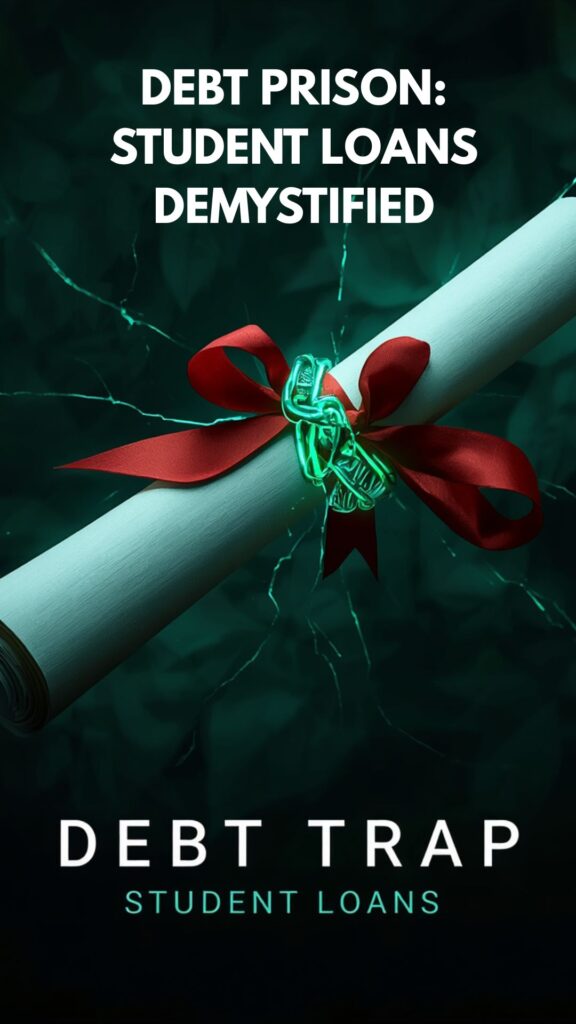
  • 5 Student Loan Debt Demystified: Smart Credit Strategies for College

    In our previous session on The ChexSystems Blacklist Shield, we analyzed how to protect your immediate access to the banking system. But as you establish your financial footing, you will likely encounter the single largest financial commitment of your young adult life: funding higher education. Every year, millions of high school graduates are systematically guided to fill out the Free Application for Federal Student Aid (FAFSA). They are told that borrowing tens of thousands of dollars is a “healthy investment in their future.”

    Unfortunately, the system rarely explains the aggressive mathematical reality of these loans. In the United States, student debt is one of the only liabilities that cannot be easily discharged through federal bankruptcy courts. To navigate this system without destroying your financial future, you must understand the rules of Student Loan Debt Demystified to protect your credit and shield your future income from predatory interest cycles.

    “A student loan is a lifelong financial contract signed by teenagers who are legally deemed too young to rent a car. You must treat this debt with absolute tactical seriousness.”

    The Ultimate Trap: Why Student Loans are Unique Creditor Weapons

    To survive this system, you must discard the naive assumption that student loans behave like standard consumer debt. If you buy a car or a house and fall into financial ruin, you can surrender the asset to the bank, file for bankruptcy, and start over with a damaged but cleanable credit profile.

    Student loans are completely insulated from these standard protections. Under current federal bankruptcy codes, discharging a federal student loan requires proving “undue hardship”—a standard so high that less than 1% of applicants ever achieve it.

    The government and private lending syndicates hold ultimate collections power. If you default, they can garnish your future wages, seize your federal tax refunds, and block your social security distributions without ever taking you to a formal court of law.

    The Subsidized Advantage vs. The Unsubsidized Drain

    When your financial aid award letter arrives, it will split your federal loans into two primary categories. Understanding the mechanical difference between these two lines is the difference between graduating with manageable debt or a financial death sentence:

    Loan Classification The Interest Mechanism Your Financial Liability During College The FICO Score Risk Level
    Direct Subsidized Loans The federal government pays the interest while you are in school at least half-time. $0 Interest Accumulation Low (Balance remains static until graduation)
    Direct Unsubsidized Loans Interest begins compounding daily the exact moment the funds are sent to your school. Interest piles up and capitalizes High (Your principal balance grows before you graduate)

    The silent killer of wealth is the concept of interest capitalization. If you borrow $10,000 in unsubsidized loans during your freshman year, and that loan accrues $2,000 in interest by the time you graduate, that $2,000 is not kept separate. The bank permanently adds it to your original $10,000 principal. You are now paying interest on top of your interest—a compounding spiral that destroys your net worth before you even enter the job market.

    The Shield: Protecting Your FICO Score from Default

    The moment you graduate or drop below half-time enrollment, a six-month grace period begins. Once that window closes, you must make monthly payments. If you miss a payment by more than 90 days, the loan is officially flagged as delinquent, causing an immediate 100-point drop in your FICO score.

    If you fall 270 days behind, you enter default. To prevent this, you must deploy the Income-Driven Repayment (IDR) Shield.

    Under federal law, you have the right to request an IDR plan, which recalculates your monthly payment based on your actual income rather than the total amount you owe. If you graduate and struggle to find a job, the government can legally adjust your monthly payment to exactly $0.

    Most importantly, the credit bureaus will report this $0 payment as “paid on time” every single month, preserving your premier FICO profile while you restructure your career.

    professional infographic with forest green and neon accents illustrating the student loan debt demystified strategy.
    Strategic utilization of subsidized loan options and income-driven repayment plans allows students to bypass interest capitalization and protect their long-term FICO score.

    Reclaim Your Sovereign Career Paths

    The modern educational establishment seeks to normalize six-figure student debt profiles, banking on the assumption that you will blindly surrender your future income to maintain their administrative budgets. This is a system designed to limit your freedom.

    By prioritizing subsidized loans, paying off interest during your college years to prevent capitalization, and utilizing income-driven repayment structures to shield your credit, you successfully outmaneuver the predatory educational machine. Take control of your debt, protect your future income, and build your wealth on your own terms.

  • 3 First Secured Credit Card Rules: Avoid Fees and Build Credit

    In our previous discussion on The Authorized User Loophole, we analyzed how you can legally inherit a family member’s established credit history. But what if that option is not available to you? What if you are completely on your own, stepping into the adult world with zero family financial backing? Do not worry. The path to a premier credit profile is still wide open. Your primary vehicle on this journey is a secured credit card. However, because you are young and inexperienced, the financial market views you as easy prey. Under the rules of the subprime credit industry, hundreds of predatory card companies are waiting to lock you into high-fee traps. To survive, you must master the fundamental First Secured Credit Card Rules to protect your cash and force the banking system to work for you.

    “A secured credit card is not a loan from the bank; it is a transactional tool where you act as your own lender. Never pay an institution a fee for holding your own money.”

    What is a Secured Card? The “Collateral Safety” Concept

    For an absolute beginner, the concept of a secured card can sound slightly confusing. Why would you give a multi-billion-dollar bank $200 just to get a credit card with a $200 limit?

    Think of it as “Collateral Safety.” Because you have no historical FICO score, the bank does not trust you yet. To eliminate their risk, they require a refundable security deposit. This deposit sits in a locked, non-interest-bearing account. If you purchase groceries on the card and refuse to pay the bill, the bank simply takes the money from your deposit.

    Because the bank faces zero risk of losing money, they will approve almost any young adult who applies—even with zero credit history. But here is the most important rule: the credit bureaus (Equifax, Experian, and TransUnion) do not receive a report saying your card is “secured.” To their automated algorithms, it looks exactly like a standard, high-leverage credit card. If you manage it responsibly, your FICO score will rise just as fast as if you had a premier, unsecured card.

    The Traps: Beware of Predatory “Fee-Harvesting” Cards

    Because the demand for secured cards among struggling young adults is incredibly high, predatory subprime lenders have built massive marketing machines to exploit them. These companies target the economically vulnerable with “easy approval” slogans.

    Before you submit a single digital application, you must run your potential card through the official First Secured Credit Card Rules Checklist:

    The Red Flag Category The Predatory Fee Mechanism The Safety Rule to Follow Why It Matters (In Plain English)
    Annual Fees Charging you $39 to $95 every year just to keep the card open. Rule 1: Seek $0 Annual Fee Only Reputable banks (Discover, Capital One) charge $0. Never pay to build credit.
    Application / Processing Fees Charging a one-time $85 fee just to process your initial application. Rule 2: Never Pay Upfront Fees If a card asks for money before you deposit your collateral, it is a fee-harvesting scam.
    Monthly Maintenance Fees Charging $5 to $8 every month as an “account servicing fee.” Rule 3: Reject Monthly Fees These micro-fees slowly drain your security deposit balance without your knowledge.
    Static Credit Limits Keeping your card locked as “secured” forever with no graduation track. Rule 4: Demand a Graduation Path Choose banks that automatically review your account to return your deposit in 6 to 8 month

    The Graduation Blueprint: Getting Your Deposit Back

    Your ultimate goal with a secured card is not to keep it forever. You want to use it as a temporary training vehicle, graduate to an unsecured card, and get your security deposit back in full.

    To trigger an automatic graduation without making phone calls to customer service, you must follow the strict 10% micro-utilization rule we established in our foundational guide. If your deposit is $200, never let your monthly statement balance exceed $20.

    If you maintain this discipline for six to eight consecutive months, premier institutions will automatically audit your profile. They will refund your $200 deposit via a direct check or statement credit, upgrade your account to an unsecured status, and frequently boost your credit limit to $1,000 or more without requiring any additional cash deposits. You have successfully forced the bank to trust you on your own terms.

    The Crucial Step: Verifying Credit Bureau Reporting

    There are small, unvetted retail credit cards and local credit union accounts that offer “no-deposit” credit building options, but they carry a fatal structural flaw: they do not report your data to all three major credit bureaus.

    If your card issuer only reports your positive payment history to Experian, but your future landlord pulls your credit report from TransUnion, you will appear as a blank slate. Always read the fine print of the card agreement to verify that the issuer reports to Equifax, Experian, and TransUnion every 30 days.

    Need Help Choosing Your First Card? Ask Us!

    With hundreds of banks competing for your attention, choosing your very first card can feel incredibly stressful. Should you go with Discover, Capital One, or your local bank? Please drop your questions and the cards you are considering in the comments below! I will personally audit the fine print for you to ensure you are not falling into a fee trap.

    If you want our curated, up-to-date list of the top three zero-fee secured cards for young adults in 2026, complete with direct application links and a checklist on how to guarantee immediate approval, we have prepared a free guide: “The First Secured Card Selector” (PDF).

    To get your copy, simply send an email request to our official inbox, and we will send the PDF directly to your device.

    A clean professional infographic with hazard yellow and cyan accents illustrating the first secured credit card rules.
    Selecting a secured credit card with zero annual fees and a guaranteed graduation path is essential for young adults building independent credit.

    Conclusion: Establish Your Financial Autonomy

    Ultimately, mastering the rules of secured credit is your first true act of financial autonomy. You do not need to rely on familial networks or predatory lenders to establish your economic footprint. By refusing to pay exploitative fees, keeping your utilization low, and forcing your accounts to graduate on a clean timeline, you build a rock-solid financial foundation that no institution can compromise.

  • 2 The Authorized User Loophole: Copy Parent Credit to Jump to 750

    In our previous session on the 1 FICO Score Zero to 750 blueprint, we learned that starting with a blank credit slate is a massive advantage. But let’s be entirely honest: waiting six to eight months for your first secured card to graduate and slowly drip-feed positive payment history into the credit bureaus requires patience. What if you need to rent an apartment next month, or what if a sudden car purchase demands an immediate, prime-rate auto loan approval? In the American financial system, there is a legal, highly effective backdoor shortcut used by wealthy generational families for decades. Under the mechanics of The Authorized User Loophole, you can legally inherit a lifetime of flawless credit history in less than thirty days, jumping your score straight to the top tier without borrowing a single dollar.

    A detailed professional infographic with neon green and gold accents illustrating the authorized user loophole strategy.
    Adding a young adult as an authorized user to an established family credit card transfers decades of positive payment history instantly.

    “The credit system is not a moral test of character; it is a mathematical database of rules. If the rules allow you to share a credit history, you have an economic obligation to leverage that network.”

    The Loophole Explained: What is an Authorized User?

    To understand this legal loophole, you need to understand how credit card accounts are structured. Every credit card has a Primary Account Holder—the person who applied for the card, provided their income details, and is legally responsible for paying the bills.

    An Authorized User is simply someone whom the primary holder adds to the account. The bank issues a secondary card with the authorized user’s name printed on it, but the bills still go directly to the primary owner.

    Here is the magic of the credit bureau algorithm: when a parent adds their child as an authorized user, the major credit bureaus (Equifax, Experian, and TransUnion) do not treat the card like a brand-new account for the child. Instead, they copy the entire historical ledger of that specific credit card—including its original opening date, credit limit, and decades of flawless on-time payment history—and paste it directly onto the child’s blank credit report.

    Overnight, the algorithm registers that you have been managing a high-limit credit line responsibly for ten years, even if you were only ten years old when the account was actually opened.

    The Strategic Blueprint: Selecting the Perfect “Donor” Card

    You cannot just hop onto any family member’s credit card and expect your score to instantly skyrocket. If the card is managed poorly, you will inherit their financial sins instead of their success.

    To ensure this strategy works flawlessly, the “donor” card must strictly meet these four non-negotiable legal parameters:

    Credit Bureau Requirement The Minimum Safety Standard Why It Matters (In Plain English) The Hidden Danger to Avoid
    Flawless Payment History 100% On-Time Payments A single 30-day late payment on the donor card will instantly destroy your FICO rating. Never join an account that has even one late payment mark in its history.
    Extensive Credit Age At Least 5+ Years Old 15% of your FICO score is determined by the average age of your active accounts. The older the card, the bigger the credit age boost you inherit.
    Low Utilization Ratio Under 10% Constantly High balances on the donor card will instantly transfer to your report as a debt burden. If your parent maxes out the card, your score will plummet immediately.
    Credit Bureau Reporting Major Banks Only Some small local credit unions do not report authorized user data to all three bureaus. Always verify with the issuer (e.g., Amex, Chase, Discover) that they report to Equifax, Experian, and TransU

    The “No-Physical-Card” Shield: Protecting Both Parent and Child

    The most common friction point with this strategy is parental anxiety. Parents are naturally terrified that their twenty-year-old child will take the secondary card, go on a massive shopping spree, and leave the parents legally responsible for thousands of dollars in debt.

    Here is the perfect structural shield to eliminate this fear completely: the child does not need to hold the physical card.

    When your parent calls the bank to add you as an authorized user, the bank will mail the new physical card directly to the parent’s home address. The parent can immediately take that card, cut it in half with scissors, or lock it in a secure desk drawer. The physical plastic is completely irrelevant. The legal connection is made through your Social Security Number (SSN) at the credit bureau database level. Your credit score receives 100% of the historical benefits even if the card never touches your physical wallet.

    The Double-Edge Sword: The Danger of Shared Risk

    You must treat this loophole with absolute caution. This is a shared financial bridge, and traffic flows both ways. If you are added to a card, and your parent suddenly experiences a medical emergency, maxes out that specific card to cover costs, or misses a monthly statement payment, that negative history will instantly reflect on your credit report, dragging your score down into subprime territory.

    Fortunately, there is a built-in safety eject button. If the donor card ever becomes a financial liability, you can simply call the credit card company yourself and ask to be “removed as an authorized user.” The credit bureaus are legally required to delete the entire history of that card from your profile within 30 days, completely erasing the damage.

    Got Questions? Let’s Solve Them Together!

    Is your family hesitant about adding you to an account? Are you unsure if your parent’s specific card qualifies as a premier donor card? Please leave your questions in the comments section below! I will personally audit your situation and give you the exact steps to handle your credit transition safely.

    If you want the exact scripts and phone templates your parents can use to add you as an authorized user in less than five minutes, along with legal templates to protect both parties, we have compiled a highly detailed guide: “The Authorized User Legal Blueprint” (PDF).

    To receive your copy entirely free of charge, simply send an email request to our official inbox, and we will dispatch the PDF directly to your device.

    Conclusion: Harness the Network Effect of Capital

    Ultimately, utilizing the Authorized User Loophole is not about taking a lazy shortcut; it is about recognizing and leveraging the network effects of accumulated family capital. The modern economic system is heavily stacked against young adults starting with nothing. By legally bridging your parents’ historical financial responsibility with your fresh financial future, you bypass years of systemic friction, securing your housing and vehicle opportunities with absolute sovereign confidence.

  • 15 Credit Card Utilization Math: Boost Your FICO Score Quickly

    Think back to our previous exploration of Renters Insurance Essentials, where we learned how a simple $15 monthly decision can shield you from catastrophic, unexpected property disasters. Protecting your physical space is smart, but let’s talk about protecting your financial reputation. In the United States, your FICO score is your financial passport.

    And if you are a young adult managing your very first credit card, you have probably run into a highly frustrating paradox.

    Your bank gave you a tiny, pathetic credit limit—maybe $300 or $500.

    You buy a single pair of sneakers and a tank of gas, and suddenly, your credit card utilization rate screams past 50%.

    The next thing you know, your credit score takes a sudden, unexplained nosedive.

    You paid your bill on time, so why is the credit algorithm punishing you for actually using the card they gave you?

    Welcome to the eccentric world of Credit Card Utilization Math.

    Today, we are uncovering the ultimate legal loop: how to artificially freeze your reported utilization at exactly 1% to force your credit score to skyrocket.

    “To the credit bureau algorithms, your payment habits do not matter as much as the specific number reported on one single day of the month. You must learn to play the calendar, not just pay the bill.”

    The Great Misunderstanding: The Due Date Illusion

    Let’s play a quick game of “Who is the Bad Guy?” Most people believe that as long as they pay their credit card bill in full by the official “Due Date” printed on their statement, their credit score will remain pristine.

    It sounds completely logical, right?

    Unfortunately, the credit bureaus do not operate on human logic.

    Your credit card company reports your account details to the three major credit bureaus only once a month.

    And they do not report your balance on your due date.

    Instead, they take a snapshot of your account balance on your Statement Closing Date—which typically occurs 21 to 25 days before your actual due date.

    Imagine this scenario: you have a card with a $500 limit.

    You spend $400 on groceries and tech gadgets throughout the month.

    On your Statement Closing Date, your balance is $400.

    The bank packages this data and sends it to Equifax, Experian, and TransUnion.

    The credit bureau algorithm looks at the raw numbers and calculates that you are using a whopping 80% of your available credit.

    Even if you pay that $400 down to zero the very next day before the due date, the damage is already done.

    For the next 30 days, the credit bureaus register you as a high-risk consumer who is maxing out their cards.

    It is a financial optical illusion, and you are the one paying the price.

    Enter the 1% Sweet Spot: Why Zero is Actually Worse

    So, how do we outsmart this automated snapshot?

    Your first instinct might be to pay your entire balance to exactly $0 before the Statement Closing Date.

    It seems like a solid plan, but the algorithm has another quirky surprise waiting for you.

    If you report a consistent $0 balance across all your credit cards, the FICO algorithm assumes your cards are abandoned, inactive, or stuffed under a mattress.

    Since you are not actively using credit, the system has no data to evaluate your behavior, which can actually cause your score to stall or slightly drop.

    The absolute golden ticket to a premier credit score is the 1% to 9% Sweet Spot.

    You want the credit bureaus to see that you are actively using your card, but with absolute, extreme restraint.

    If you have a $500 limit, you want your reported statement balance to be exactly $5.

    This single digit proves to the algorithm that you are capable of handling credit lines responsibly, triggering an immediate boost to your credit score.

    A vibrant neon yellow infographic illustrating the credit card utilization math and the statement closing date strategy.
    Paying your credit card balance down to exactly 1% of your limit three days before the statement closing date ensures a perfect credit utilization snapshot.

    The Prep Method: The Pre-Payment Formula

    To pull off this credit magic trick, you must master the art of the Pre-Payment Formula.

    You do not need to wait for the bank to send you a monthly bill.

    Instead, you need to log into your online banking portal and find your specific Statement Closing Date.

    Once you identify this target date, set a recurring calendar reminder on your phone for three days prior to the closing date.

    On that day, calculate your current balance and pay it down until you have exactly 1% of your limit remaining.

    If your limit is $300, pay your balance down until you owe exactly $3.

    Let that tiny $3 balance ride across the Statement Closing Date so the bank reports a 1% utilization rate to the bureaus.

    Once the statement officially closes and your monthly bill is generated, simply pay that remaining $3 before the official due date to avoid paying a single penny in interest.

    You have successfully manipulated the reporting grid, securing a perfect credit snapshot while keeping your cash completely under your control.

    Conclusion: Command Your Financial Narrative

    At the end of the day, navigating the American credit system is not about being a passive consumer who follows the basic rules on the back of the statement envelope.

    It is about understanding the mechanical gears of the system and turning them to your advantage.

    By timing your payments to beat the Statement Closing Date, keeping your utilization locked at a pristine 1%, and refusing to let banks report artificial debt, you take sovereign control of your financial narrative.

    Play the game smart, watch your score climb, and claim the premium credit profile you deserve.