Tag: American History

  • Why Is Republican Called GOP: 3 Critical Shock Secrets

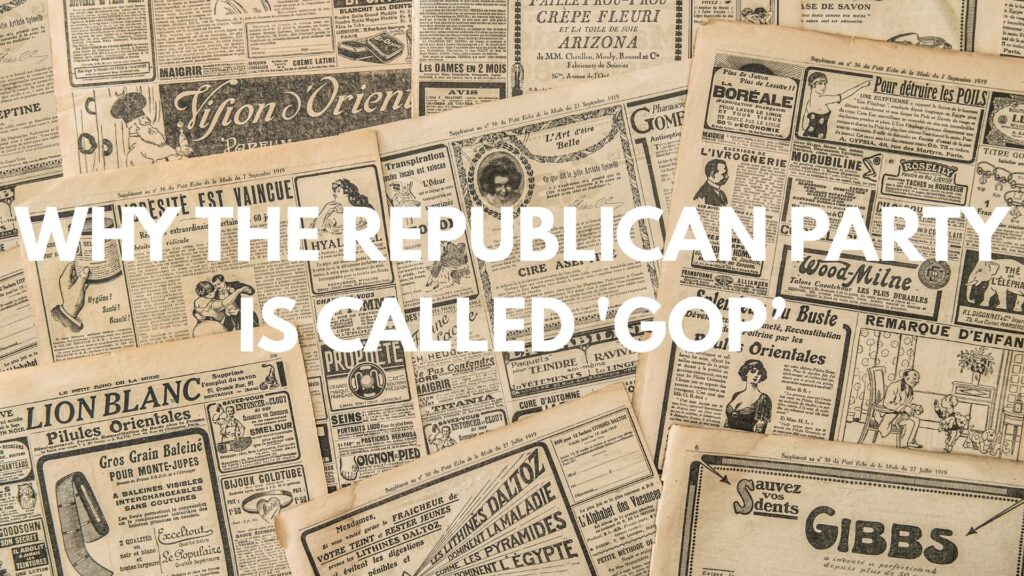
    A clean historical infographic explaining the origins and meaning of the acronym GOP for the Republican Party.
    The acronym GOP, standing for Grand Old Party, has a deep-rooted historical origin dating back to the Civil War era.

    In the contemporary geopolitical landscape, minor acronyms frequently carry immense historical weight. While global media outlets continuously dissect the ideological movements of American conservatism, foreign observers and young domestic voters routinely encounter a puzzling semantic question: Why is Republican called GOP, and how did three simple letters transform into the ultimate institutional brand for one of the world’s most powerful political organizations? To fully comprehend the deep-rooted identity of American legislative battles, one must unearth the fascinating historical genealogy behind the “Grand Old Party.”

    1. The Civil War Legacy and the Birth of the “Grand” Moniker

    The roots of the phrase can be traced directly back to the tumultuous era of the American Civil War and its immediate aftermath. Founded in the 1850s as a dedicated anti-slavery coalition, the Republican Party rapidly achieved institutional dominance under the leadership of Abraham Lincoln. Following the preservation of the Union, the party aligned its identity with national survival, corporate industrial expansion, and constitutional preservation.

    Initially, the acronym did not possess its modern definition. In the late 19th century, military veterans and southern editorial writers began referencing the party as the “Gallant Old Party” to honor the Union soldiers who fought on the battlefields. According to historical records preserved within the Republican National Committee archives [GOP Historical Archives], this phrase gradually transitioned into “Grand Old Party” through a series of high-profile political speeches and major journalistic columns in the 1880s, permanently cementing the name in the American lexicon.

    2. The Technological Shift: How Typography Standardized the Acronym

    While the full phrase carried immense rhetorical prestige, the shorthand acronym “GOP” owed its standardized adoption to a purely pragmatic commercial variable: the evolution of print journalism and typesetting constraints. In the late 19th and early 20th centuries, newspaper editors faced severe layout limitations when building headline fonts on traditional printing presses.

    Spelling out “Grand Old Party” or even “The Republican Party” consumed precious vertical real estate on front pages. Typesetters discovered that the three-letter shorthand “GOP” allowed for massive, high-impact headline font configurations that immediately caught the reader’s eye at newsstands. What began as a mechanical workaround to save space quickly morphed into a permanent, highly efficient marketing brand that transcended the print medium, remaining universally recognized in the digital broadcasting era.

    [Expert Analytical Insight: The Paradox of Institutional Branding]

    The systemic irony embedded in the reality of why is Republican called GOP lies in the historical inversion of the brand itself. When the acronym was consolidated in the late 19th century, the Republicans were actually the progressive, radical, and disruptive force in American politics, responsible for uprooting old agrarian economic structures. Today, the moniker functions as a protective shield for traditionalism, fiscal conservatism, and constitutional originalism.

    This evolution demonstrates how elite political organizations utilize historical brand prestige to mask contemporary policy transitions. By perpetually anchoring their contemporary legislative efforts to the grand, nostalgic aura of the “Grand Old Party,” modern strategists successfully foster a deep-seated cultural loyalty that often bypasses rational policy evaluation. In modern media environments, a highly compressed, three-letter brand identity is the ultimate asset for maintaining base cohesion amidst constant economic polarization.

    Shifting the Grand Old Party Infrastructure into 2026

    The contemporary utility of this historic brand remains heavily tied to the party’s ongoing strategy for legislative control. The GOP operates as a highly coordinated fundraising and electoral machine designed to capture majorities across state and federal chambers.

    Whether the party can leverage its traditional values to secure victory remains the central narrative of the upcoming election cycles. As established in our foundational guide regarding the broader [US Midterm Elections 2026], the tactical utilization of institutional branding will play a decisive role in shaping voter turnout and dictating the future legislative trajectory of the United States.

    Conclusion: More Than Just an Acronym

    Ultimately, the story behind the acronym is a testament to the power of political evolution and media packaging. From the battlefields of the Civil War to the compressed headlines of early newspapers, the term has survived because it effectively encapsulates a specific, enduring vision of American governance. For anyone tracking the future of the republic, recognizing that the GOP is an ongoing historical continuation—not just a contemporary faction—is essential for truly decoding the structural currents of American power.

  • Richard Nixon: 3 Dark Secrets of the Only Resigned President

    A dramatic historical infographic detailing the paranoia, Watergate tapes, and foreign policy of President Richard Nixon.
    Richard Nixon remains the only president in United States history to resign from the executive office due to a constitutional crisis.

    Great historical tragedies are rarely driven by ideological movements alone; more frequently, they are engineered by the subterranean insecurities of a single human mind. In the grand lexicon of American governance, the narrative of the thirty-seventh chief executive is universally treated as a dark cautionary tale of systemic corruption and constitutional crisis. The historical footprint of Richard Nixon is permanently stained by the architecture of a forced resignation. Yet, a professional psychological audit of his private White House routine exposes an intensely isolated, profoundly paranoid individual—a leader who systematically transformed the executive mansion into a fortress of surveillance to combat imaginary enemies, only to destroy his own legacy from within.

    The Midnight Solitude: Paranoia and the White House Ghost

    The private baseline of this administration was defined by a severe, progressive clinical insomnia and a profound aversion to human interaction. Unlike his charismatic predecessor John F. Kennedy, who utilized elite social networks to project vitality, this executive operated in deep, defensive isolation.

    As the pressure of domestic political challenges mounted, his behavior grew increasingly eccentric. White House logs and personal memoirs from his inner circle reveal that the president would routinely wander the darkened corridors of the executive mansion at 3:00 AM, holding vocal, imaginary conversations with the painted portraits of historical leaders like Abraham Lincoln. Driven by an all-consuming fear that the elite establishment, the media, and federal intelligence agencies were actively conspiring to destroy him, he turned to heavy alcohol consumption during critical midnight hours, severely compromising his emotional stability. This permanent state of psychological siege is essential to understanding the defensive legal maneuvers that ultimately triggered his constitutional downfall.

    Architectural Milestones: Masterful Geopolitics and Domestic Safeguards

    Despite the immense constitutional trauma that defines his historical exit, his structured policy executions permanently altered the global geopolitical matrix and established the modern domestic regulatory perimeter.

    • The Chinese Realignment (1972): Mastermind the historic “Ping-Pong Diplomacy,” becoming the first US president to formally visit the People’s Republic of China, effectively shifting the balance of the Cold War and driving a strategic wedge between Beijing and the Soviet Union.

    • The Environmental Infrastructure (1970): Unilaterally signed the executive order establishing the Environmental Protection Agency (EPA), introducing comprehensive federal oversight to protect public health and ecology.

    • The Detente Strategy: Successfully brokered the historic Strategic Arms Limitation Talks (SALT I) with Moscow, significantly reducing the immediate threshold of global thermonuclear friction.

    • The Economic Shock (1971): Unilaterally terminated the direct international convertibility of the United States dollar to gold, permanently shifting the global financial system toward a floating fiat currency model.

    The Tape Machine: The Mechanics of Self-Destruction

    The catastrophic collapse of his presidency was fueled not by external journalism, but by his own obsessive desire to record history for future validation. In 1971, the president secretly ordered the Secret Service to install an automated, voice-activated audio surveillance matrix across the Oval Office and the executive cabinet rooms.

    Every single conversation, diplomatic negotiation, and tactical political strategy was captured on hundreds of hidden magnetic tapes. According to official declassified transcripts hosted by the National Archives and Records Administration [NARA Nixon White House Tapes] , it was the forced release of these exact recordings—specifically the infamous “Smoking Gun” tape—that proved the president had actively ordered the FBI to halt the investigation into the Watergate burglary. This explicit command to obstruct justice stripped him of his remaining legislative allies, forcing his ultimate resignation before the full House could execute formal impeachment.

    [Expert Analytical Insight: The Imperial Panic and the Illusion of Loyalty]

    The contemporary cultural condemnation of the thirty-seventh presidency focus entirely on the illegality of the Watergate break-in, yet this focus misses the true institutional pathology: the weaponization of national security classifications to execute petty partisan warfare. He truly believed that because he was the president, his actions were inherently legal, operating under the absolute delusion of executive immunity.

    The systemic hazard for the modern electorate is that contemporary executive offices continue to inherit the massive surveillance infrastructure created during this era. When a leader allows deep-seated personal resentment and a siege mentality to dictate state policy, they automatically view any legitimate legislative oversight or journalistic critique as an act of treason. This imperial panic inevitably forces the administration to value absolute blind loyalty over structural competence, transforming the federal apparatus into an insulated echo chamber where legal boundaries are systematically treated as irrelevant suggestions.

    Connecting Watergate Scars to the 2026 Legislative Fuse

    The bitter constitutional arguments regarding executive privilege, judicial subpoenas, and the boundaries of federal law enforcement oversight initiated during the 1970s continue to serve as the primary legal coordinates defining contemporary congressional polarization. The fundamental question of how aggressively a congressional committee can investigate executive overreach remains a vital point of friction.

    The structural control of the upcoming legislative chambers will determine whether unilateral executive power faces severe constitutional checks or receives total political immunity. As heavily detailed in our core structural analysis of the upcoming US Midterm Elections 2026, the contemporary congressional battles over accountability and deep-state weaponization are a direct, unceasing continuation of the structural precedents established during the Nixon crisis.

    Furthermore, the systemic stagnation often seen in modern administrative oversight is heavily driven by procedural tools like the Senate cloture threshold, a mechanism thoroughly analyzed in our report on What is Filibuster.

    Conclusion: The Architecture of Failure

    Ultimately, analyzing the legacy of this fractured leader requires an absolute willingness to separate strategic geopolitical genius from profound character flaws. He was an exceptionally sophisticated international strategist who successfully realigned global superpowers, yet his own inner darkness engineered his absolute public humiliation. By exploring both the majesty of his opening of China and the grim reality of his cover-ups, the electorate gains an invaluable, unvarnished insight into the raw, delicate mechanics of constitutional governance.

  • 5 Crucial Roles: US Vice President Power

    5 Crucial Roles: US Vice President Power

    The US Vice President Power is one of the most unique and often misunderstood aspects of American governance. Often described as a heartbeat away from the presidency, the Vice President (VP) serves as the ultimate partner and counselor to the Commander-in-Chief. While the Constitution grants limited formal duties, the modern reality of the office has evolved into a role of immense strategic and executive influence. To understand the American power structure, one must understand how the VP operates as the shadow and support of the President.

    An educational diagram explaining the US Vice President Power and role in the White House.
    The Vice President serves as the President’s most trusted advisor and successor, providing essential support to the administration.

    How the Vice President is Chosen

    In the early days of the Republic, the runner-up in the presidential election became the Vice President. However, this often led to political rivals working in the same office, causing significant friction. Since the 12th Amendment, VPs have been elected on a single ticket with the President.

    Modern candidates choose their “running mate” based on “balancing the ticket.” This means picking a partner who provides geographic, ideological, or demographic diversity that the presidential candidate lacks. For example, a young candidate might pick a seasoned veteran to reassure voters about experience, as discussed in our analysis of [Most Trusted News Sources US].

    The Constitutional and Modern Powers

    The formal US Vice President Power defined by the Constitution is relatively narrow:

    1. President of the Senate: The VP presides over the Senate and casts the tie-breaking vote when needed.

    2. The Successor: They are the first in line to assume the presidency if the incumbent dies, resigns, or is removed.

    However, since the mid-20th century, the role has expanded. Today, the VP is a key advisor, a diplomatic envoy, and a manager of high-stakes policy initiatives. They work in total alignment with the President, ensuring that the administration’s vision is executed across federal agencies.

    History’s Most Influential Vice Presidents

    When we look at history, certain figures stand out for how they wielded US Vice President Power to reshape the nation:

    • Dick Cheney: Often cited as the most powerful VP in history, Cheney took an unprecedented role in national security and foreign policy after 9/11.

    • Joe Biden: Serving under Obama, Biden was the “ultimate counselor,” using his decades of Senate experience to navigate complex legislative battles.

    • Lyndon B. Johnson: Although he had a complicated relationship with JFK, his deep ties to Congress were essential for the administration’s early successes.

    Who is the Most Beloved Vice President?

    While “most loved” is subjective, Joe Biden and George H.W. Bush often rank highly in public approval during their time as VP.

    • The Loyal Partner: Biden was loved for his genuine “Uncle Joe” persona and his clear, unwavering loyalty to Barack Obama. Their partnership became a symbol of political synergy.

    • The Competent Successor: Bush Sr. was admired for his quiet competence and international expertise under Reagan, which eventually propelled him to the presidency.

    American voters tend to favor VPs who project stability and a “team-first” mentality. They appreciate a leader who doesn’t try to outshine the President but works tirelessly to ensure the administration succeeds.

    The VP as the Ultimate Political Partner

    The core of the US Vice President Power lies in being the “second set of eyes” for the President. In a polarized era, as we noted in the [Digital Isolation and Loneliness]  report, the President needs a confidant they can trust implicitly.

    • Alignment is Key: The VP must look in the same direction as the President. Any public disagreement can be seen as a sign of weakness in the administration, potentially affecting the [2026 Midterm Elections Checklist].

    • The Crisis Manager: Whether it’s dealing with the  [US National Debt Crisis] or responding to international conflicts, the VP is often the first person the President calls for a private consultation.

    Conclusion: The Backbone of the Executive Branch

    The US Vice President Power is not just about a title; it is about the strength of the partnership. As we look toward the future of American politics and the shifting demographics seen in the [Gen Z Political Leanings], the Vice President will continue to be the bridge between the White House and the people. They are the silent architects of policy and the loyal protectors of the President’s legacy.


    🎙️ Senior’s Tip: The Power of the Second Seat

    “In the world of high-stakes politics, everyone wants to be the star, but the truly wise understand the power of the second seat. The US Vice President Power is built on trust, not just a constitution. A great VP is like a master architect who builds the foundation so the President can stand on the roof. In your own ventures, remember that being a ‘Director’ or a top-tier partner is about total alignment and shared vision. Don’t let ego get in the way of a great partnership. True influence isn’t always about who has the loudest voice; it’s about whose counsel is sought when the doors are closed and the stakes are highest.”