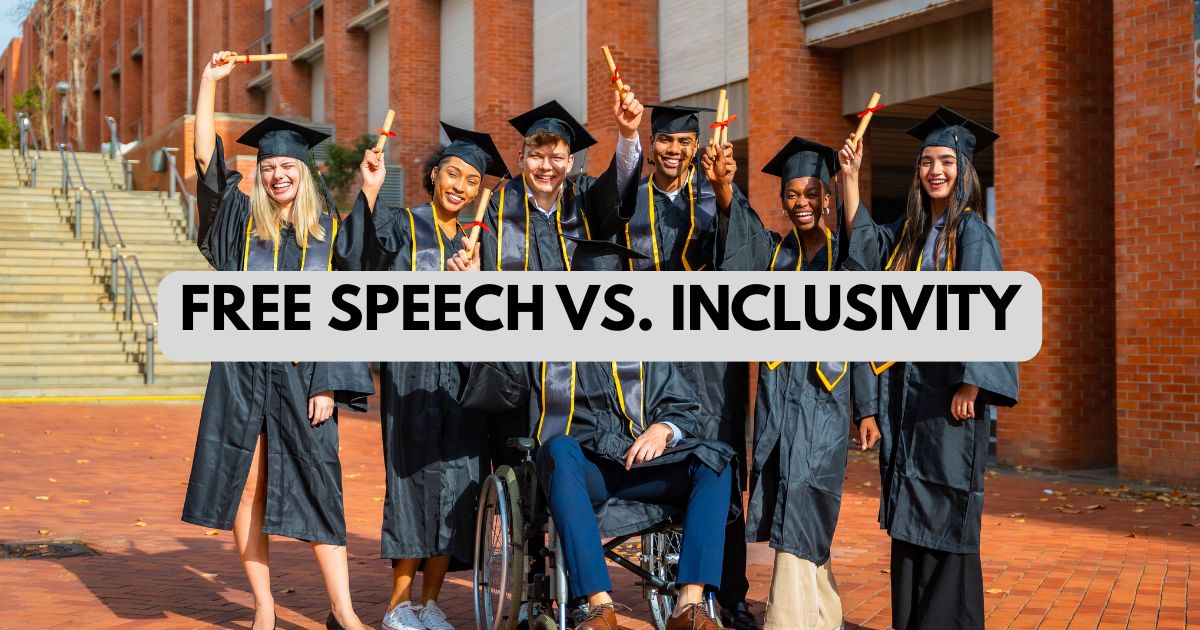
The tension between Campus Free Speech & PC (Political Correctness) has reached a fever pitch on American university campuses in 2026. What was once envisioned as a movement to foster inclusivity and protect marginalized voices has transformed into a complex legal and social minefield. Today’s students are navigating a “tightrope walk” where the line between protected expression and prohibited hate speech is increasingly blurred. To understand this crisis, we must look beyond the slogans and examine the structural shifts in how young people communicate, learn, and engage with “the other.”
The Origin: From Inclusivity to Institutionalization
Political Correctness didn’t emerge in a vacuum. Its modern roots can be traced back to the social movements of the 1960s and 1970s. Originally, the goal was simple: to use language that avoids offending or marginalizing specific groups. By the late 1980s, this practice became institutionalized within academia, leading to more inclusive curricula.
However, critics argue that this shift also brought a “New Leftist” elitism that prioritized ideological conformity over open debate, a sentiment often echoed in the [Most Trusted News Sources US] when discussing media bias. What began as empowerment eventually evolved into “speech codes” that some describe as an “Orwellian nightmare” stifling academic freedom.
The Age of Disconnection: COVID and Media Echo Chambers
The intensity of today’s campus conflict is inseparable from the social isolation caused by the COVID-19 pandemic and the rise of algorithmic media.
-
The Echo Chamber Effect: Social media algorithms create “filter bubbles” that prevent exposure to diverse views. This phenomenon is closely linked to the [Digital Isolation and Loneliness] epidemic we see today.
-
Digital Polarization: Online platforms have become hubs for political deliberation, but they also facilitate the spread of extremist ideas, as seen in [Gen Z Political Leanings].
-
The Loss of Nuance: When students engage only with like-minded peers behind a screen, the ability to tolerate dissenting opinions in a physical classroom atrophies.
Real-World Cases: The Tightrope Walk in 2026
The debate has real-world consequences for university administration and student life.
-
Antisemitism Briefings: In early 2026, the U.S. Commission on Civil Rights held urgent briefings to investigate the surge of incidents on campuses. These cases highlight the difficulty of distinguishing between political protest and targeted harassment.
-
Disinvitation Culture: Prominent speakers are frequently disinvited following student protests, a trend that has accelerated alongside the polarized climate mentioned in our [2026 Midterm Elections Checklist].
-
Generational Divide: Recent polls show that while many prioritize inclusive environments, others view these efforts as a threat to the First Amendment.
The Legal Boundary: First Amendment vs. Safe Spaces
Public universities face a unique challenge because they are government actors bound by the First Amendment. While they can impose “time, place, and manner” restrictions on protests, they cannot legally censor speech based on its content or viewpoint.
-
The Censorship Debate: Critics argue that modern PC culture acts as a “new McCarthyism,” using intellectual intimidation to delegitimize opponents. This legal tension often mirrors the judicial shifts discussed in [Supreme Court Conservative Majority] .
According to the U.S. Department of Education [Campus Safety and Freedom of Expression], finding a balance between safety and expression is the top priority for 2026 educational policy.
Conclusion: A Generation at the Crossroads
Universities are the incubators of the next generation of leaders. If the Campus Free Speech & PC conflict results in a culture of silence, the future of democratic discourse is at risk. However, if campuses can reclaim their role as “bastions of free speech” where students are encouraged to think self-reflectively about the impact of their language, there is a path forward. The goal should be to embrace a richer vision of education that survives the “age of hate” through restored communication.
🎙️ Senior’s Tip: The Digital Armor vs. The Open Mind
“Listen carefully. We are living in an era where universities should be ‘places where it’s okay to be wrong,’ yet they have become ‘places where you are socially exiled if you are wrong.’ The tension between Campus Free Speech & PC is evidence that our ’empathy muscles’ have atrophied as we hide behind our digital screens. The social isolation of the past few years has stripped away our ability to handle nuance. For the youth of 2026 to lead, they must break out of their digital echo chambers and face the raw, unfiltered voices of others. Real growth happens when we stop seeking ‘safe spaces’ from ideas and start building ‘brave spaces’ for dialogue. We are still humans, not just polarized profiles. Let’s start acting like it.”