Tag: Pennsylvania

  • 7 Secrets: Rust Belt & US Election Deciding the Winner

    7 Secrets: Rust Belt & US Election Deciding the Winner

    The Rust Belt & US Election dynamic remains the single most influential variable in American presidential politics. To understand the future of the United States, one must first look at the “rust”—the literal and metaphorical decay of the industrial heartland that once served as the backbone of the global economy. This region, stretching from the edge of the East Coast through the Great Lakes, holds the keys to the Electoral College. In 2026, as political polarization reaches new heights, the Rust Belt is no longer just a geographical area; it is a psychological and economic battlefield where the “American Dream” is being fought for.
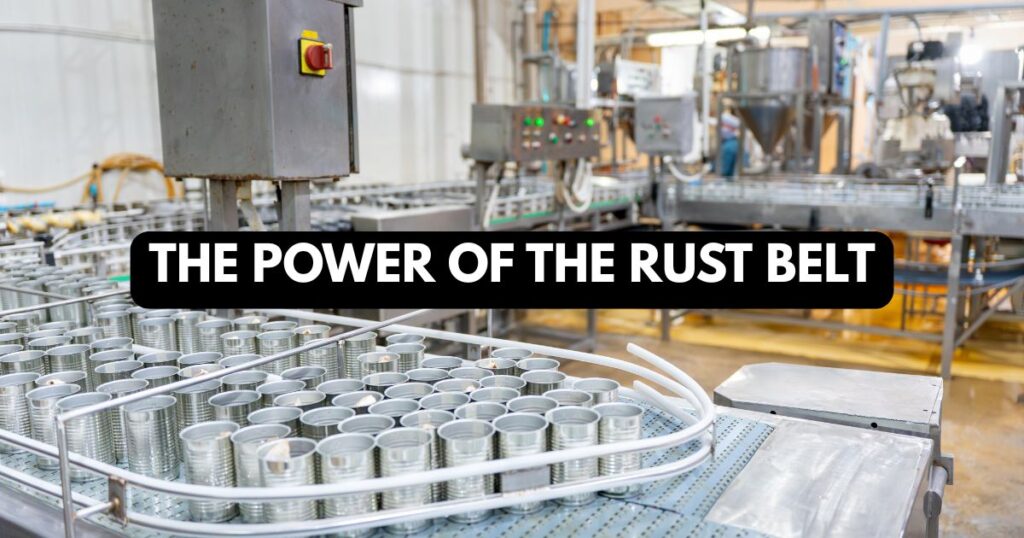
    A comprehensive long-form analysis of how the Rust Belt region influences the US election results in 2026.
    A comprehensive long-form analysis of how the Rust Belt region influences the US election results in 2026.

    Defining the Rust Belt: From Powerhouse to Protest

    For the uninitiated, the term “Rust Belt” refers to a group of states—primarily Pennsylvania, Ohio, Michigan, Wisconsin, Illinois, and Indiana—that dominated global manufacturing from the late 19th century through the mid-20th century. During the “Golden Age” of American capitalism, these states produced the steel, automobiles, and machinery that built the modern world.

    However, starting in the late 1970s, this region began to “rust.” The combination of automation, the rise of global trade agreements like NAFTA, and the transition toward a service-oriented economy led to the closure of thousands of factories. This wasn’t just an economic shift; it was a cultural trauma. Millions of blue-collar workers, who had enjoyed middle-class lifestyles without university degrees, suddenly found themselves obsolete. This deep-seated resentment is exactly what drives the Rust Belt & US Election outcomes today.

    The Electoral Mechanics: Why 77,000 Votes Matter

    In a nation of 330 million people, it is often a tiny sliver of Rust Belt voters who decide the presidency. Because of the U.S. Electoral College, most states are predictably locked for one party. However, states like Pennsylvania, Michigan, and Wisconsin are “Swing States” that flip based on thin margins.

    In 2016, Donald Trump won the presidency by securing these three states by a combined total of only about 77,000 votes. This narrow victory demonstrated that the [2026 Midterm Elections Checklist]  and general elections are decided not by the national popular vote, but by the specific economic anxieties of the Midwest.

    Candidate Logic: The Battle for the Blue-Collar Vote

    Every serious presidential candidate must develop a “Rust Belt Strategy.” This usually involves a mix of economic protectionism and cultural signaling.

    1. The Populist Playbook: Donald Trump mastered this by framing himself as a protector against “globalist” forces. His rhetoric on trade, mirroring the [US China Trade War Tariffs], speaks directly to those who believe their jobs were “stolen” by foreign nations.

    2. The Institutional Struggle: Democrats often struggle to balance their climate change goals, such as the [IRA EV Tax Credit 2026] , with the immediate needs of coal and steel workers. In the Rust Belt, “Green Energy” is often viewed with suspicion as a threat to existing industrial jobs.

    3. Judicial Influence: Candidates also promise to appoint judges who will favor domestic labor laws or deregulation. The impact of the [Supreme Court Conservative Majority] is often touted as a way to ensure that federal regulations don’t “strangle” what’s left of American manufacturing.

    2026 Current Status: Reshoring vs. Reality

    As of early 2026, the narrative of “Reshoring”—bringing manufacturing back to the U.S.—is the central theme. Trump and his allies argue that their protectionist policies have caused a “Manufacturing Renaissance.” They point to new microchip factories and steel mills as evidence of a successful comeback.

    However, data from the U.S. Census Bureau  [Manufacturing Economic Data]  suggests a more complex reality. While high-tech manufacturing is growing, it requires highly specialized labor, leaving the traditional blue-collar worker behind. This disconnect fuels the  [US National Debt Crisis] as the government pours billions into subsidies that may not result in mass employment for the original Rust Belt demographic.

    The Human Factor: Crime, Community, and Education

    The decline of the Rust Belt isn’t just about money; it’s about the collapse of social structures. Many industrial cities have faced skyrocketing [US City Crime Rates 2026] and drug epidemics as traditional communities dissolved. Experts argue that we shouldn’t just focus on “bringing back jobs,” but on “rebuilding communities.”

    • Education Gap: There is a desperate need for vocational training that bridges the gap between old-school labor and new-age technology.

    • Mental Health: The isolation felt in these dying towns is a direct contributor to the [Digital Isolation and Loneliness] we see across the nation.

    Conclusion: The Unpredictable Future

    The Rust Belt & US Election saga is far from over. As we approach the next election cycle, both parties are doubling down on their Rust Belt promises. But as history shows, these voters are not loyal to a party; they are loyal to the promise of a stable life. Whether it’s through tariffs, infrastructure bills, or tax credits, the candidate who can truly convince the Rust Belt that their “rust” can be polished away will be the one who sits in the Oval Office.

    We are still a long way from a fully recovered heartland. But as long as the Electoral College remains, the road to the White House will always run through the cracked pavement of a Rust Belt factory town.


    🎙️ Senior’s Tip: The Pulse of the Heartland

    “Listen carefully, because this is the secret to American politics: The Rust Belt & US Election isn’t about policy white papers or intellectual debates. It’s about respect. For decades, the people in these states felt looked down upon by the ‘coastal elites.’ When Trump showed up in 2016 and said, ‘I see you,’ it changed everything. In 2026, the resentment is still there. If you’re analyzing the polls, don’t just look at the numbers—look at the sentiment. Even with the [Most Trusted News Sources US]  trying to frame the narrative, the reality is lived in the small towns that the world forgot. If you want to win, you have to win the heartland. Period.”
  • PA Ballot Ruling: 2026 Shift

    The Keystone Conflict: Deciphering the Pennsylvania Mail-in Ballot Ruling

    As the countdown to the 2026 Midterm Elections begins, all eyes are once again fixed on Pennsylvania. Often referred to as the “Keystone State,” Pennsylvania is more than just a geographic center; it is the ultimate political barometer of the United States. Recently, the Pennsylvania Supreme Court issued a high-stakes ruling regarding the validity of undated or wrongly dated mail-in ballots—a decision that could dictate the margin of victory in one of the nation’s most contested battlegrounds.

    The controversy centers on whether a simple clerical error, such as a missing handwritten date on an outer envelope, should disqualify a legally cast vote. In a state where elections are decided by a fraction of a percentage point, thousands of ballots hang in the balance. This isn’t just a legal debate; it’s a structural conflict that defines the tension between “Strict Procedural Adherence” and “Voter Inclusivity.”

    A close-up of a person signing a mail-in ballot, highlighting the importance of procedural accuracy in Pennsylvania elections.
    The PA Supreme Court’s decision on undated ballots could shift the 2026 Midterm results.

    1. Why Pennsylvania is the Ultimate Battleground

    To understand why this ruling is causing such a stir, one must understand the unique political chemistry of Pennsylvania. The state is a microcosm of America, blending industrial urban centers, sprawling suburbs, and deeply conservative rural heartlands. It is the “Strategic Flagship Store” of American democracy. If a political party cannot “sell” its vision in Pennsylvania, it likely won’t win the national market.

    In the  [GOP vs. Dems]  power struggle, Pennsylvania represents the decisive 19 electoral votes (in presidential terms) and a critical Senate seat that often determines the balance of power in Washington. Every administrative rule, from the placement of drop boxes to the ink color on a ballot, becomes a weapon in a high-stakes chess match. The recent court decision to uphold strict dating requirements is seen by some as a win for “Election Integrity” and by others as a “Technical Barrier” designed to suppress turnout.


    [Director’s Insight: The Keystone Strategy and Systemic Integrity]

    I often think of Pennsylvania as a “Strategic Hub” In the business world, if you secure the flagship location that represents the entire market’s demographic, you control the brand’s future. Pennsylvania is exactly that for US politics. This is why a single ruling on a handwritten date carries so much weight—it is the fine print in a multi-billion dollar contract.

    From my perspective, a vote is a citizen’s “Voice of Trust” in the government’s service. Just as a minor error in a business contract can lead to a voided agreement, procedural rules in elections are there to ensure integrity. However, we must ask: Is our system efficient enough? If thousands of “customers” are making the same clerical error, it suggests a flaw in the “User Interface” of our democracy. True leadership shouldn’t just fight over the errors; it should innovate the system to make it foolproof. In 2026, the state that manages its “Election Logistics” with the most transparency and efficiency will be the one that leads the nation.


    2. Procedural Rigor vs. Voter Intent: The Legal Framework

    The Pennsylvania Supreme Court’s decision to maintain strict dating rules is a nod to the [US Legislative Process] emphasis on the “Letter of the Law.” Proponents of the ruling argue that clear, consistent rules are the only way to prevent fraud and ensure that every county counts ballots the same way. Without these “Guardrails,” they claim, the door is left open for subjective interpretations and post-election litigation.

    On the other side of the aisle, figures like [Rosa DeLauro]  have long advocated for removing administrative burdens that disproportionately affect elderly and minority voters. The argument here is simple: if the ballot arrives on time and the voter’s identity is verified, a missing date is a “harmless error.” Yet, the law in Pennsylvania, as interpreted by the current court, remains rigid. This sets the stage for a massive voter education campaign leading up to November 2026, as parties scramble to ensure their supporters don’t fall victim to technicalities.

    3. The Ripple Effect on the 2026 Midterms

    What happens in Pennsylvania rarely stays in Pennsylvania. This ruling provides a blueprint for how other “Purple States” might handle ballot disputes. It also signals that the judiciary is increasingly reluctant to change election rules close to an election cycle—a principle known as the “Purcell Principle.” This means that the rules established now are likely the ones that will govern the chaos of 2026.

    Moreover, the focus on mail-in ballots highlights the ongoing digital and logistical shift in how Americans vote. As we discussed regarding  [Elon Musk’s X], the platform for political discourse has changed, and so has the “Delivery Method” of the vote. The logistical efficiency of counting mail-in ballots is now just as important as the campaign trail itself. Any delay in Pennsylvania’s results due to ballot disputes could trigger a nationwide crisis of confidence.

    4. Building a Foolproof Democracy

    The real takeaway from the Pennsylvania ballot saga is the need for Administrative Excellence. In a high-performing organization, if a process is prone to human error, the process is redesigned. Why should our democracy be any different? Instead of spending millions on legal fees to argue over dated envelopes, those resources could be spent on “Smart Ballots” or enhanced digital verification systems that eliminate the possibility of clerical mistakes.

    As we move forward, the “Keystone State” will continue to be the laboratory where the future of American voting is tested. Whether through the lens of the Supreme Court or the local board of elections, the goal must remain the same: a system that is easy to use but impossible to cheat. The 2026 Midterms will be the ultimate stress test for this philosophy.

    Conclusion: Beyond the Handwritten Date

    The Pennsylvania mail-in ballot ruling is a reminder that in democracy, the “Small Details” are actually the “Big Details.” As we analyze the road to 2026 at [US Political Insight], we see a nation grappling with its own complexity. The fight over a handwritten date is a proxy for a much larger struggle over who belongs in the American story and how their voices are counted. In the end, the most successful political strategy in 2026 won’t just be about winning arguments; it will be about winning the trust of a skeptical public through transparency and procedural perfection.