Tag: Swing States

  • US Electoral College: 3 Shocking Voting System Secrets

    A unique architectural infographic illustrating the mechanics and flaws of the US Electoral College system.
    The US Electoral College remains one of the most unique and debated constitutional mechanisms in global politics.

    Imagine winning the national popular vote by over 500,000 ballots and still losing the presidency of the United States. This is not a dystopian political fiction; it was the exact reality of the 2000 presidential election. In most modern constitutional democracies, the mathematical formula for securing executive power is absolute: the candidate with the most individual votes wins the office. However, the American republic operates on a completely unique architectural anomaly known as the US Electoral College, a systemic blueprint where geographical boundaries matter far more than numerical majorities.

    The Mechanism: Popular Vote vs. Electors

    To understand why the American system functions through this fragmented framework, one must analyze the stark structural divergence between the will of the individual populace and the allocation of institutional electoral points.

    Electoral Element National Popular Vote US Electoral College System
    Core Target Total individual citizen ballots cast across the nation. 538 total electoral points allocated to states.
    Winner Criterion Absolute mathematical majority of the entire population. Securing a minimum threshold of 270 electoral points.
    State Mandate Treats all citizens as a single, unified electorate. Utilizes a high-stakes “Winner-Take-All” state-level model.

    1. The Winner-Take-All Rule: Erasing Minority Ballots

    The primary mechanical flaw that shocks external observers is the state-level “winner-take-all” framework utilized by 48 out of 50 states. Under this system, if a candidate wins a state by a razor-thin margin of just a single individual ballot, they are immediately awarded 100% of that state’s electoral points.

    This mechanical allocation effectively erases millions of opposition ballots cast within that state. For instance, a conservative voter residing in a deeply progressive state, or a progressive voter living in a heavily conservative state, discovers that their individual ballot possesses zero structural leverage on the national stage. This concentration of power heavily mirrors the structural block voting parameters analyzed in our foundational guide on the [US Midterm Elections 2026].

    2. The Swing State Monopoly: Engineering the Campaign Trail

    Because the vast majority of states possess deeply entrenched, predictable partisan alignments, the entire national presidential campaign effectively contracts into a handful of highly volatile “swing states.” Factions completely ignore safe states, focusing their massive corporate funding, television advertisements, and policy promises exclusively on a tiny percentage of the national electorate.

    This geographical insulation alters the legislative priorities of the federal government. Budgets, infrastructure spending, and specialized industrial subsidies are routinely directed toward these swing regions to buy political favor. As heavily detailed in our extensive investigation regarding the concentration of budgetary authority and [Rosa DeLauro Power], federal resources are continuously weaponized to secure electoral leverage ahead of critical constitutional deadlines.

    [Expert Analytical Insight: The Institutional Protection of Minority Tyranny]

    The traditional defense of the US Electoral College dictates that it prevents a few highly populated metropolitan cities from dominating national policy. However, the modern reality exposes a far more dangerous systemic hazard: it actively subsidizes minority tyranny. When a candidate can capture the highest office in the world while experiencing a massive deficit in the national popular vote, the foundational concept of democratic legitimacy is shattered.

    This structural disconnect deepens public cynicism, convincing the citizenry that the entire voting infrastructure is an engineered illusion designed to protect establishment entities. Rather than fostering national unity, this archaic cartography locks the nation into a state of permanent polarization, where rural and urban geographies treat each other as existential threats rather than co-equal participants in a shared constitutional republic.

    The Digital Vulnerability and Legislative Overhaul

    The friction surrounding this complex system has intensified due to the integration of modern hyper-targeted digital media campaigns. Foreign and domestic political action committees no longer need to alter public opinion across the entire United States; they merely need to manipulate a few thousand swing-state voters using advanced algorithmic modeling.

    Managing this micro-targeted digital warfare has forced state capitals to implement aggressive new safeguards, a crisis thoroughly explored in our current report on [AI Election Laws]. If the legislature fails to establish uniform transparency parameters, the stability of the entire voting system faces severe vulnerability.

    Furthermore, procedural changes to electoral count rules are constantly blocked by entrenched institutional dynamics, a state of gridlock fueled by tools like the Senate supermajority rule, as outlined in our comprehensive breakdown of [What is Filibuster] . According to historical archival data hosted via the National Archives and Records Administration  [Electoral College Functions], any structural reform to this constitutional process requires an amendment threshold that modern polarized majorities simply cannot achieve.

    Conclusion: The Cartography of Tomorrow

    Ultimately, the survival of the American electoral architecture depends heavily on whether the public continues to accept a system where a dollar or a geographic boundary holds more leverage than an individual voice. While the constitutional framework remains highly insulated from radical structural change, the growing divide between the popular vote and the electoral winner poses a continuous, lingering challenge to the stability of the republic.
  • 7 Secrets: Rust Belt & US Election Deciding the Winner

    7 Secrets: Rust Belt & US Election Deciding the Winner

    The Rust Belt & US Election dynamic remains the single most influential variable in American presidential politics. To understand the future of the United States, one must first look at the “rust”—the literal and metaphorical decay of the industrial heartland that once served as the backbone of the global economy. This region, stretching from the edge of the East Coast through the Great Lakes, holds the keys to the Electoral College. In 2026, as political polarization reaches new heights, the Rust Belt is no longer just a geographical area; it is a psychological and economic battlefield where the “American Dream” is being fought for.

    A comprehensive long-form analysis of how the Rust Belt region influences the US election results in 2026.
    A comprehensive long-form analysis of how the Rust Belt region influences the US election results in 2026.

    Defining the Rust Belt: From Powerhouse to Protest

    For the uninitiated, the term “Rust Belt” refers to a group of states—primarily Pennsylvania, Ohio, Michigan, Wisconsin, Illinois, and Indiana—that dominated global manufacturing from the late 19th century through the mid-20th century. During the “Golden Age” of American capitalism, these states produced the steel, automobiles, and machinery that built the modern world.

    However, starting in the late 1970s, this region began to “rust.” The combination of automation, the rise of global trade agreements like NAFTA, and the transition toward a service-oriented economy led to the closure of thousands of factories. This wasn’t just an economic shift; it was a cultural trauma. Millions of blue-collar workers, who had enjoyed middle-class lifestyles without university degrees, suddenly found themselves obsolete. This deep-seated resentment is exactly what drives the Rust Belt & US Election outcomes today.

    The Electoral Mechanics: Why 77,000 Votes Matter

    In a nation of 330 million people, it is often a tiny sliver of Rust Belt voters who decide the presidency. Because of the U.S. Electoral College, most states are predictably locked for one party. However, states like Pennsylvania, Michigan, and Wisconsin are “Swing States” that flip based on thin margins.

    In 2016, Donald Trump won the presidency by securing these three states by a combined total of only about 77,000 votes. This narrow victory demonstrated that the [2026 Midterm Elections Checklist]  and general elections are decided not by the national popular vote, but by the specific economic anxieties of the Midwest.

    Candidate Logic: The Battle for the Blue-Collar Vote

    Every serious presidential candidate must develop a “Rust Belt Strategy.” This usually involves a mix of economic protectionism and cultural signaling.

    1. The Populist Playbook: Donald Trump mastered this by framing himself as a protector against “globalist” forces. His rhetoric on trade, mirroring the [US China Trade War Tariffs], speaks directly to those who believe their jobs were “stolen” by foreign nations.

    2. The Institutional Struggle: Democrats often struggle to balance their climate change goals, such as the [IRA EV Tax Credit 2026] , with the immediate needs of coal and steel workers. In the Rust Belt, “Green Energy” is often viewed with suspicion as a threat to existing industrial jobs.

    3. Judicial Influence: Candidates also promise to appoint judges who will favor domestic labor laws or deregulation. The impact of the [Supreme Court Conservative Majority] is often touted as a way to ensure that federal regulations don’t “strangle” what’s left of American manufacturing.

    2026 Current Status: Reshoring vs. Reality

    As of early 2026, the narrative of “Reshoring”—bringing manufacturing back to the U.S.—is the central theme. Trump and his allies argue that their protectionist policies have caused a “Manufacturing Renaissance.” They point to new microchip factories and steel mills as evidence of a successful comeback.

    However, data from the U.S. Census Bureau  [Manufacturing Economic Data]  suggests a more complex reality. While high-tech manufacturing is growing, it requires highly specialized labor, leaving the traditional blue-collar worker behind. This disconnect fuels the  [US National Debt Crisis] as the government pours billions into subsidies that may not result in mass employment for the original Rust Belt demographic.

    The Human Factor: Crime, Community, and Education

    The decline of the Rust Belt isn’t just about money; it’s about the collapse of social structures. Many industrial cities have faced skyrocketing [US City Crime Rates 2026] and drug epidemics as traditional communities dissolved. Experts argue that we shouldn’t just focus on “bringing back jobs,” but on “rebuilding communities.”

    • Education Gap: There is a desperate need for vocational training that bridges the gap between old-school labor and new-age technology.

    • Mental Health: The isolation felt in these dying towns is a direct contributor to the [Digital Isolation and Loneliness] we see across the nation.

    Conclusion: The Unpredictable Future

    The Rust Belt & US Election saga is far from over. As we approach the next election cycle, both parties are doubling down on their Rust Belt promises. But as history shows, these voters are not loyal to a party; they are loyal to the promise of a stable life. Whether it’s through tariffs, infrastructure bills, or tax credits, the candidate who can truly convince the Rust Belt that their “rust” can be polished away will be the one who sits in the Oval Office.

    We are still a long way from a fully recovered heartland. But as long as the Electoral College remains, the road to the White House will always run through the cracked pavement of a Rust Belt factory town.


    🎙️ Senior’s Tip: The Pulse of the Heartland

    “Listen carefully, because this is the secret to American politics: The Rust Belt & US Election isn’t about policy white papers or intellectual debates. It’s about respect. For decades, the people in these states felt looked down upon by the ‘coastal elites.’ When Trump showed up in 2016 and said, ‘I see you,’ it changed everything. In 2026, the resentment is still there. If you’re analyzing the polls, don’t just look at the numbers—look at the sentiment. Even with the [Most Trusted News Sources US]  trying to frame the narrative, the reality is lived in the small towns that the world forgot. If you want to win, you have to win the heartland. Period.”

  • 2026 Midterm Elections: Why Incumbents Always Lose

    2026 Midterm Elections: Why Incumbents Always Lose

    2026 Midterm Elections D-Month Checklist: Is the White House Facing a Historical Graveyard?

    As the countdown to the 2026 Midterm Elections begins, the political atmosphere in Washington is increasingly suffocating. Historically, the midterm cycle has earned a reputation as the “Graveyard of the Incumbent Party.” For the current administration, this isn’t just a statistical anomaly—it is a looming reality fueled by a controversial “America First” agenda that has sent shockwaves through the global economy. If the current trajectory of prioritizing domestic gains at the expense of global stability continues, the 2026 cycle will not just be a loss; it will be a reckoning.

    A critical look at the 2026 Midterm Elections and the historical loss of the incumbent party.
    Historical data suggests a tough road for the GOP in 2026.

    The Historical Curse: Why the Ruling Party Fails

    Statistically, the President’s party has lost seats in nearly 90% of all midterm elections since the Civil War. This phenomenon occurs because the 2026 Midterm Elections serve as a national referendum on the administration’s performance. When the White House shifts from campaigning to governing, the coalition that brought them to power often dissipates, while the opposition is energized by every policy misstep. To understand how these shifts began, recall our analysis of the  [Electoral College 2026: The Ultimate Guide]  which detailed the structural hurdles of American power.

    Global Pain for Domestic Gain: The Ethics of a Superpower

    A political and economic superpower carries a global responsibility that the current Trump administration seems to have abandoned. By manipulating global energy markets and leveraging military conflicts for political leverage, the U.S. is effectively exporting inflation and hardship. While the administration claims to be “fixing” the economy, the reality is that the world is suffering under the weight of high energy prices and disrupted supply chains. This lack of international accountability is a primary driver of voter dissatisfaction among moderate Americans who see the moral and economic cost of this isolationism.

    The 2026 Midterm Checklist: Key Vulnerabilities

    As we check the boxes for the 2026 Midterm Elections, several red flags appear for the GOP. The strategy of “maximum pressure”—not just on adversaries, but on allies—is creating a backlash that will likely manifest at the ballot box.

    • The Energy Crisis: Trump’s policies have destabilized global energy security, leading to volatile gas prices at home.

    • Economic Isolationism: Trade wars are beginning to bite back, affecting the very manufacturing hubs that were promised a “Renaissance.” For more context on these economic shifts, see our report on  [2026 CPI Data Analysis].

    • Voter Fatigue: The constant chaos of the “Permanent Campaign” is exhausting the suburban voters who decide the 2026 Midterm Elections.

    The Responsibility of a Political Giant

    Being a “Political Giant” means more than just having the largest military; it means providing the stability that the global market requires. Instead, the current administration has treated global geopolitics like a zero-sum game. This approach has alienated traditional allies and created an opening for adversaries to fill the leadership vacuum. Voters are increasingly aware that a leader who burns bridges abroad eventually leaves their own citizens stranded. This sentiment is particularly strong in battleground states like Ohio, as noted in our [Ohio Primary 2026 Insights].

    Will the 2026 Midterms Be a Referendum on Hubris?

    The ultimate question for the 2026 Midterm Elections is whether the American public will tolerate the “World’s Suffering” as a price for domestic political theater. If the GOP fails to take responsibility for the global repercussions of its energy and foreign policies, the “Graveyard” of the midterm elections will be particularly crowded this year.

    Conclusion: A Call for Strategic Accountability

    The GOP must realize that an “America First” policy that leaves the rest of the world behind is ultimately unsustainable. The global economy is too interconnected for one nation to thrive while others are in agony. As we approach the 2026 Midterm Elections, the checklist for victory must include a return to global responsibility. Without it, the incumbent party is destined to repeat the failures of history, losing the very mandate they fought so hard to secure.

  • Electoral College 2026: The Ultimate Guide to 270 Votes

    Electoral College 2026: The Ultimate Guide to 270 Votes

    Electoral College 2026: The Ultimate Guide to Understanding the 270 Vote Threshold

    The Electoral College remains the most critical yet misunderstood component of American democracy. As we look toward the 2026 Midterm Elections, understanding the Electoral College is not just an academic exercise—it is a strategic necessity for grasping how American power is won and maintained. This system continues to dictate the rhythm of national campaigns and the distribution of political influence across the 50 states. To gain a broader perspective on national voting patterns, you should first examine the [Ohio Primary 2026 Insights]  which provides a baseline for current voter behavior.

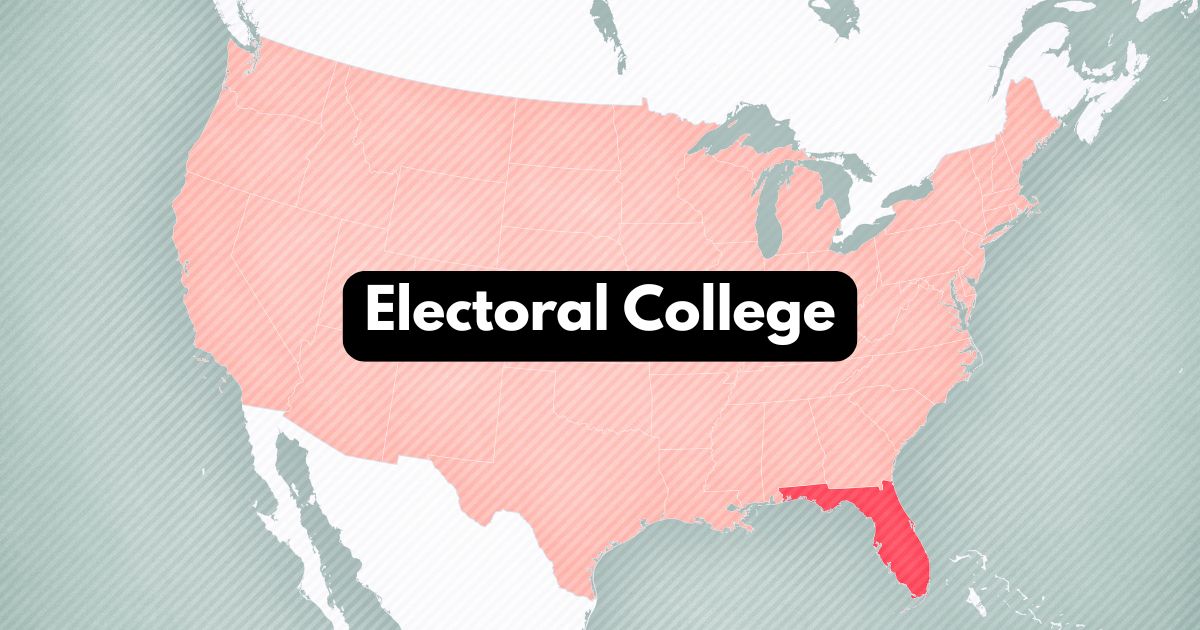
    A detailed 2026 US map explaining the Electoral College and the 270 vote threshold.
    Securing 270 votes in the Electoral College is the ultimate goal.

    The Mechanics of the Electoral College and the 538 Electors

    The Electoral College is composed of 538 electors, a number that reflects the total membership of the U.S. Congress. To secure the presidency, a candidate must win a majority of at least 270 electoral votes. Each state’s number of electors is determined by its total congressional representation: two senators plus the number of its members in the House of Representatives.

    How Elector Allocation Works in 2026

    This formula ensures that every state, regardless of population, has a minimum of three electoral votes. In 2026, the census-driven reapportionment of these seats continues to shift the political gravity toward the Sun Belt, altering the traditional electoral map. This shift is a key reason why candidates focus so heavily on regional economic data. For more on the economic drivers of voter sentiment, see our analysis on the  [2026 CPI Data Analysis].

    The Winner-Take-All System and Swing States

    Most states employ a “Winner-Take-All” system for the Electoral College, where the candidate who wins the popular vote plurality receives all of that state’s electoral votes. This reality is why national campaigns focus disproportionately on a handful of “Swing States” like Pennsylvania, Michigan, and Arizona.

    Strategic Impact of the Electoral College on 2026 Midterms

    While the Electoral College specifically elects the President, its shadow looms over the 2026 Midterm Elections. The boundaries of electoral influence are often shaped by economic and social factors that influence voter sentiment. According to the official  [U.S. National Archives on Electoral College] , this institution was designed to balance the interests of high-population and low-population states.

    Economic Factors and the Electoral College

    The economy remains the top priority for voters in battleground states that decide the Electoral College. The latest inflation data is a critical variable in how these states might lean in the next cycle. Candidates must align their fiscal platforms with the specific needs of these diverse voting blocs to maintain structural “Stability.”

    The Role of State Legislatures in Electoral College Reform

    State-level decisions on how elections are conducted can have ripple effects on the Electoral College. Understanding the legislative framework of these states is vital for recognizing the long-term trajectory of U.S. policy and the defense of democratic institutions. Many states are currently debating the “National Popular Vote Interstate Compact,” which could fundamentally change the Electoral College without a constitutional amendment.

    The Global Debate: Popular Vote vs. Electoral College

    One of the most persistent criticisms of the Electoral College is the possibility of a candidate winning the national popular vote but losing the presidency. This phenomenon remains a flashpoint for debates over democratic integrity in 2026.

    Proponents of the Current Electoral College System

    Proponents argue that the Electoral College preserves federalism and prevents high-population states from monopolizing the executive branch. They believe it forces candidates to build a geographically diverse coalition, maintaining the “Character” of the United States as a union of states rather than a single direct democracy.

    Arguments for Electoral College Reform

    Critics suggest that the Electoral College diminishes the “Human Factor” of individual votes in non-competitive states. They often advocate for reforms that would align the presidency more closely with the direct will of the people. This debate continues to shape the legislative agendas of both major parties as they prepare for the 2026 cycle.

  • The Path to 2026: Comprehensive Analysis of Key Battlegrounds Defining the US Midterm Elections

    As the United States moves closer to the 2026 midterm elections, political strategists, analysts, and voters are shifting their focus toward specific “battleground” states. These regions are not just geographical markers but are the crucibles where the future balance of power in both the House of Representatives and the Senate will be forged. Understanding the dynamics of these states is essential for anyone tracking the trajectory of American governance.

    An analysis image for the 2026 US midterm elections, featuring a Capitol building and a decision-making voter.
    Analysis of the upcoming 2026 US Midterm Elections.

    1. Why the 2026 Midterms are a National Turning Point

    The 2026 elections serve as a critical midpoint for the current administration, acting as a direct referendum on established policies. Historically, the party in power faces significant challenges during midterms, but 2026 is unique due to the extreme polarization of the electorate. With major debates surrounding federal spending, healthcare access, and national security, the outcome of these races will either provide a mandate for the executive branch or create a legislative deadlock that could last for years.

    2. Deep Dive into the “Big Three”: Pennsylvania, Arizona, and Georgia

    Three states stand at the center of the political universe: Pennsylvania, Arizona, and Georgia.

    In Pennsylvania, the focus remains on the “Blue Wall” and whether suburban voters in the collar counties of Philadelphia will remain aligned with current trends or swing back toward conservative fiscal policies. Meanwhile, Arizona continues to be a demographic battlefield. The rapid growth of the Latino vote and the influx of new residents from higher-cost states like California have made its political identity increasingly complex and difficult to predict. Finally, Georgia represents the new frontier of Southern politics, where urban mobilization in Atlanta battles rural traditionalism, making every single vote a potential decider for Senate control.

    3. The Economic Engine: Inflation, Housing, and Voter Sentiment

    While social issues often dominate the headlines, the 2026 midterms will likely be won or lost on economic grounds. “Kitchen table issues”—specifically inflation, interest rates, and housing affordability—are the primary drivers of voter sentiment. In battleground states, the rising cost of living is a bipartisan concern. Candidates who can offer pragmatic, localized solutions to these macroeconomic pressures will have a distinct advantage in capturing the hearts and minds of the working class.

    4. The Independent Factor: Decoding the Pragmatic Majority

    The most influential group in 2026 will be the independent voters. This demographic, which rejects strict partisan labels, is growing in size and significance. They are less moved by ideological rhetoric and more focused on effective governance and stability. Strategists on both sides are currently working to craft messages that appeal to this “pragmatic majority,” as their shifting loyalties often determine the final percentage points in narrow races.

     5. Technology and Information: The New Campaign Frontier

    Lastly, the role of artificial intelligence and digital outreach will be unprecedented in 2026. From micro-targeting specific neighborhoods to managing the flow of information on social media, technology is redefining how campaigns are run. Ensuring the integrity of this information and reaching voters where they live—online—will be a top priority for candidates seeking to dominate the 2026 political landscape.

    Check out our previous post on [Trump’s Citizenship Crackdown] https://us-political-insight.com/trump-administrations-citizenship-crackdown-new-legal-shifts-and-what-to-expect/