Tag: US Economy

  • US China Trade War Tariffs: Shocking Tax on Americans

    US China Trade War Tariffs: Shocking Tax on Americans

    US China Trade War Tariffs have returned with a vengeance in 2026, framed by the Trump administration as a masterstroke to reclaim American wealth. However, the sophisticated rhetoric of “making China pay” masks a darker, more painful reality: these tariffs are essentially a massive, regressive tax levied directly against the American public. While the goal is to hoard dollars and cripple a rival, the actual execution is hollowing out the wallets of the very people who cheered for the policy.
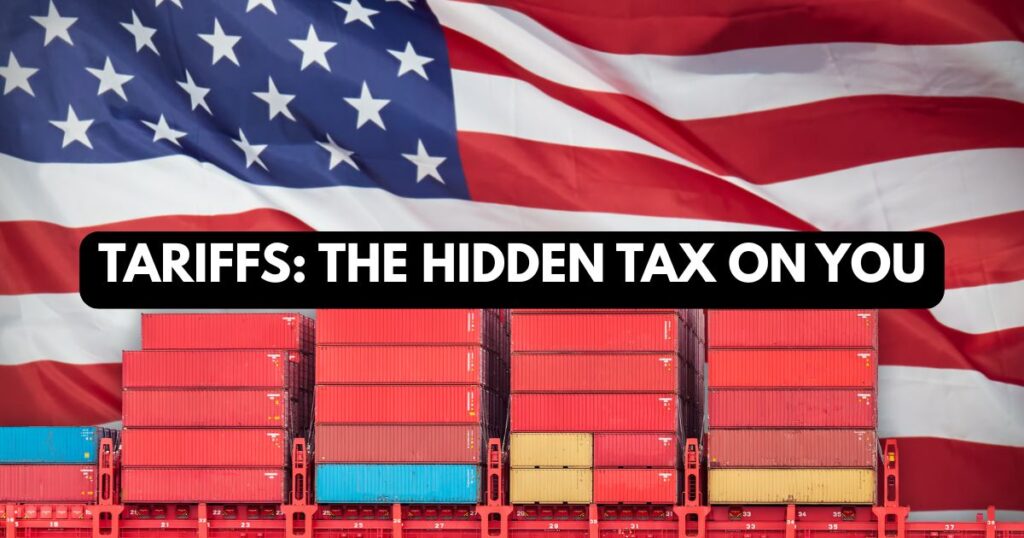
    An infographic showing how US China trade war tariffs are passed down as costs to American consumers in 2026.
    The real cost of US China Trade War Tariffs.

    The Mirage of Wealth: Who Really Pays?

    The fundamental misunderstanding of US China Trade War Tariffs is the belief that the exporting nation pays the tax. In reality, tariffs are paid by the domestic companies importing the goods. To maintain profit margins, these costs are immediately passed down to the consumer.

    • The Price Hike: From electronics to basic household goods, the “Tariff Surcharge” is becoming a permanent fixture in American retail.

    • Supply Chain Chaos: Companies shifting production away from China face massive relocation costs, which further fuel the inflation we analyzed in our [2026 CPI Data Analysis].

    From Trade War to Cold War: A Dangerous Escalation

    The initial skirmishes of the trade war have evolved into something far more sinister. What began as a dispute over steel and soy has metastasized into a geopolitical struggle that risks actual military conflict.

    1. Weaponizing the Dollar: The strategy to collect dollars through tariffs is a desperate move to manage the [US National Debt Crisis].

    2. Retaliation Cycles: China’s counter-tariffs on American tech and energy have paralyzed key US sectors, leaving neighboring nations as collateral damage in a fight they never asked for.

    The Voter’s Delusion: Supporting Your Own Tax Increase

    Why do so many Americans still applaud US China Trade War Tariffs? The answer lies in the potent mix of nationalism and economic illiteracy.

    • The “Strongman” Narrative: As explored in our look at [Gen Z Political Leanings], there is a growing hunger for aggressive leadership that promises to “punish” rivals, even if it costs the supporter personally.

    • Hidden Costs: Because tariff increases aren’t labeled as “taxes” on a receipt, the average voter blames “corporate greed” or “global inflation” rather than the trade policies they voted for.

    According to the Tax Foundation  [Impact of Tariffs on Consumers] , tariffs are among the most economically damaging ways to raise revenue, disproportionately affecting lower-income households.

    A Superpower Holding Itself Hostage

    A true “Political and Economic Superpower” should lead through innovation, not through the blunt force of protectionism that chokes its own citizens. The current administration’s insistence on doubling down on US China Trade War Tariffs suggests a lack of long-term vision. We are sacrificing the stability of the global market for short-term political theater. This hubris is exactly what we warned about in the [2026 Midterm Elections Checklist] .

    The Ripple Effect on Housing and Living

    The cost of construction materials inflated by tariffs is a hidden driver behind the [2026 Housing Market Analysis]. When the roof over your head and the food on your table both become more expensive because of a “Trade War,” it is time to rethink the strategy.

    Conclusion: Time for a Reality Check

    The US China Trade War Tariffs of 2026 are a testament to the power of political spin over economic reality. As we slide further into this conflict, the American consumer remains the ultimate casualty. We must stop and ask: Is the symbolic victory over a rival worth the actual poverty of our own people? We are still a long way from a rational trade policy, and until the public realizes they are the ones signing the check, the “War” will continue at their expense.
  • US National Debt Crisis: $34 Trillion Joke?

    US National Debt Crisis: $34 Trillion Joke?

    US National Debt Crisis numbers have finally surpassed $34 trillion, a figure so astronomical that it feels more like a dark comedy than a fiscal report. While Washington politicians treat the national treasury like a limitless credit card with no expiration date, the rest of the world is watching the “Great American Experiment” teeter on the edge of a fiscal cliff. This isn’t just a budget deficit; it is a fatal structural collapse disguised as a temporary setback.

    us-national-debt-crisis-34-trillion-impact
    US National Debt Crisis analysis and the $34 trillion milestone.

    The Recipe for a $34 Trillion Disaster

    How did the US National Debt Crisis reach this surreal milestone? The ingredients for this toxic economic cocktail have been brewing for decades, but the current administration has turned up the heat to a boiling point.

    1. The “Printing Press” Philosophy: Whenever a problem arises—be it a pandemic or a proxy war—the solution is always the same: print more money.

    2. Interest on the Interest: We are now at a point where the interest payments alone are rivaling the defense budget. We are literally borrowing money just to pay the interest on the money we already borrowed.

    3. Global Overreach: Maintaining the status of a “Political and Economic Superpower” is expensive, especially when you are financing conflicts across two continents while your own infrastructure crumbles.

    The Bubble That Refuses to Pop (Until It Does)

    The terrifying aspect of the US National Debt Crisis is that it feels sustainable right until the second it isn’t. The “Bubble Economy” is propped up by the dollar’s status as the world’s reserve currency, but that trust is evaporating. When the world decides it no longer wants to subsidize American overspending, the resulting hyperinflation will make the current [2026 CPI Data Analysis]  look like the “good old days.”

    Predicting the Collapse: When Does the Party End?

    Economists are divided, but the data points toward a critical junction following the  [2026 Midterm Elections Checklist] .

    • The 2027 Cliff: As the temporary tax cuts expire and the full weight of the  [Federal Reserve Chair Appointment Crisis] hits, the market will realize that the $34 trillion debt is mathematically unpayable.

    • Voter Sentiment: Citizens are starting to realize that the “America First” rhetoric doesn’t fill their gas tanks or lower their mortgages, as seen in our [2026 Housing Market Analysis].

    According to the official U.S. Treasury Department fiscal data  [Debt to the Penny] , the debt is increasing by nearly $2 trillion per year—a pace that no G7 nation can sustain without eventually facing a currency devaluation.

    The Humorous Tragedy of Modern Finance

    If you don’t laugh, you’ll cry. The US National Debt Crisis is like a man jumping off a 100-story building and saying, “So far, so good,” as he passes the 50th floor. We are currently at the 10th floor, and the pavement is looking very hard. The hubris of thinking we can “grow our way” out of a $34 trillion hole without massive tax hikes or spending cuts is the ultimate political delusion.

    Conclusion: A Superpower on Life Support

    Is the U.S. economy dead? No, but it is on life support, and the electricity bill is $34 trillion overdue. Until we stop treating our national debt like a “brain-off” task and start making the hard choices that often suggests, we are destined for a reckoning that will reshape the global order. The 2026 Midterms may be the last chance to change course before the bubble finally bursts.

  • 2026 Housing Market Trends: Fatal Crash or Rise?

    2026 Housing Market Trends: Fatal Crash or Rise?

    2026 Housing Market Trends are increasingly defined by a paradox of high demand and stifling interest rates, creating a landscape that feels more like a minefield for the average buyer. As we move deeper into the election year, the “American Dream” of homeownership has transformed into a high-stakes political debate. The current administration’s inability to stabilize the housing sector is not just an economic failure; it is a

    A critical analysis of the 2026 US housing market trends and economic impact.
    2026 Housing Market Trends and Political Implications.

    direct catalyst for the shifting tides in the upcoming election.

    The Affordability Gap: A Nation Divided

    The primary driver of the 2026 Housing Market Trends is the unprecedented gap between stagnant wages and soaring property values. In major metropolitan areas, the median home price has reached levels that exclude nearly 70% of the working population. This is not a mere market correction; it is a systemic exclusion that breeds deep-seated resentment among younger voters.

    • Supply Shortage: New construction has failed to keep pace with demographic shifts, leading to a “bidding war” culture.

    • Institutional Buyers: Large corporations continue to snap up single-family homes, turning potential homeowners into permanent renters.

    The Mortgage Stranglehold: Federal Reserve’s Heavy Hand

    The shadow of the [Federal Reserve Chair Appointment Crisis] hangs heavily over every real estate closing. With mortgage rates hovering at historic highs, the “lock-in effect” has paralyzed the market—current homeowners refuse to sell and lose their low rates, while new buyers are priced out. This stagnation is a primary reason why we are still a long way from a healthy economic recovery.

    Political Fallout: Housing as a Vote Killer

    In the context of the [2026 Midterm Elections Checklist], housing is the “silent issue” that could topple the incumbent party.

    1. Democratic Strategy: Proposing rent control and first-time buyer subsidies, which critics argue will only drive prices higher by stimulating demand without addressing supply.

    2. GOP Strategy: Focusing on deregulation and curbing federal spending to lower inflation, though these measures offer little immediate relief to those currently unhoused.

    According to the latest U.S. Department of Housing and Urban Development (HUD) reports  [HUD Market Analysis], the rental market is also showing signs of extreme stress, with evictions reaching pre-pandemic highs in several swing states.

    The Death of the Suburbs?

    As people flee the chaos described in our [US City Crime Rates 2026] , the demand for safe suburban housing has skyrocketed. However, the lack of infrastructure and the high cost of commuting are making the suburbs less of a sanctuary and more of a financial burden. This shift is creating a “Digital Nomad” class that prioritizes internet connectivity over physical community, echoing the concerns of social isolation we discussed regarding the  [TikTok Ban Legal Timeline].

    Economic Superpower or Housing Slum?

    For a “Political and Economic Superpower,” the inability to house its own citizens is a national embarrassment. The current administration’s focus on global conflicts and energy manipulation has left the domestic housing market to rot. A nation that cannot provide roofs for its people cannot expect to lead the world with any moral authority.

    Conclusion: The Bubble That Won’t Burst

    The 2026 Housing Market Trends indicate a market that is fundamentally broken. Whether through a fatal crash or a slow, agonizing rise in prices, the current path is unsustainable. Until we address the greed of institutional investors and the rigidity of the Federal Reserve, the “American Dream” will remain a nightmare for most. We are still a long way from solving this crisis, and the voters will surely remember this at the ballot box.

  • Federal Reserve Chair Appointment: Shocking Death of Independence

    Federal Reserve Chair Appointment: Shocking Death of Independence

    Federal Reserve Chair Appointment processes in 2026 are increasingly under fire as political shadows loom over the financial heart of Washington.

    The whispers of a “loyalist” replacement are no longer just rumors; they are a direct threat to the financial stability of the global economy. The Federal Reserve Chair Appointment has historically been a shield against political whims, but under the current administration, that shield is being melted down to forge a political weapon.

    The Ghost of Arthur Burns: When Politics Trumps Policy

    To understand the danger of a political Fed, we must look at the disastrous tenure of Arthur Burns in the 1970s. Succumbing to pressure from President Nixon to keep interest rates low for reelection, Burns ignited the “Great Inflation” that crippled the U.S. economy for a decade. When a Federal Reserve Chair Appointment is based on “loyalty” rather than “literacy,” history repeats itself with agonizing precision.

    The Anatomy of a Political Climber: Characteristics of the “Yes-Man”

    What defines the individuals currently vying for the Fed Chair? These political climbers share distinct, dangerous traits:

    1. Ideology Over Data: They prioritize the President’s “America First” tweets over objective data.

    2. Short-Term Vision: They ignite long-term hyperinflation for a six-month “market rally.”

    3. The “Director” Persona: They possess the sophisticated title but lack the moral backbone to say “No.”

    Why the 2026 Midterm Context Matters

    The push for a compliant Fed is linked to the [2026 Midterm Elections Checklist]. The administration knows the historical “graveyard” of midterms can only be avoided if the economy feels artificially pumped. By threatening the Federal Reserve Chair Appointment process, they are attempting to hijack the interest rate lever to win votes.

    The Global Ripple Effect: Exporting Economic Chaos

    As a “Political and Economic Superpower,” the U.S. has a duty to maintain a stable dollar. However, a politicized Fed would destabilize global trade. As noted in the [2026 CPI Data Analysis], inflation is already a global contagion. A Fed Chair who lacks independence will only pour gasoline on this fire.

    The High Stakes of the 2026 Transition

    Replacing a seasoned hand with a political operative is a gamble with the world’s wealth. The Fed’s independence is not a luxury; it is the foundation of trust. For a deeper look at institutional shifts, see our report on  [Ohio Primary 2026 Insights].

    According to the official Federal Reserve Board historical records (🔗External Link: [Federal Reserve History] , political pressure on central banks has always led to long-term economic instability.

    Conclusion: A Warning to the Market

    The Federal Reserve Chair Appointment of 2026 will be the ultimate litmus test. Will we remain a nation of laws, or become a banana republic where currency is managed by the highest political bidder?

  • 2026 Midterm Elections: Why Incumbents Always Lose

    2026 Midterm Elections: Why Incumbents Always Lose

    2026 Midterm Elections D-Month Checklist: Is the White House Facing a Historical Graveyard?

    As the countdown to the 2026 Midterm Elections begins, the political atmosphere in Washington is increasingly suffocating. Historically, the midterm cycle has earned a reputation as the “Graveyard of the Incumbent Party.” For the current administration, this isn’t just a statistical anomaly—it is a looming reality fueled by a controversial “America First” agenda that has sent shockwaves through the global economy. If the current trajectory of prioritizing domestic gains at the expense of global stability continues, the 2026 cycle will not just be a loss; it will be a reckoning.

    A critical look at the 2026 Midterm Elections and the historical loss of the incumbent party.
    Historical data suggests a tough road for the GOP in 2026.

    The Historical Curse: Why the Ruling Party Fails

    Statistically, the President’s party has lost seats in nearly 90% of all midterm elections since the Civil War. This phenomenon occurs because the 2026 Midterm Elections serve as a national referendum on the administration’s performance. When the White House shifts from campaigning to governing, the coalition that brought them to power often dissipates, while the opposition is energized by every policy misstep. To understand how these shifts began, recall our analysis of the  [Electoral College 2026: The Ultimate Guide]  which detailed the structural hurdles of American power.

    Global Pain for Domestic Gain: The Ethics of a Superpower

    A political and economic superpower carries a global responsibility that the current Trump administration seems to have abandoned. By manipulating global energy markets and leveraging military conflicts for political leverage, the U.S. is effectively exporting inflation and hardship. While the administration claims to be “fixing” the economy, the reality is that the world is suffering under the weight of high energy prices and disrupted supply chains. This lack of international accountability is a primary driver of voter dissatisfaction among moderate Americans who see the moral and economic cost of this isolationism.

    The 2026 Midterm Checklist: Key Vulnerabilities

    As we check the boxes for the 2026 Midterm Elections, several red flags appear for the GOP. The strategy of “maximum pressure”—not just on adversaries, but on allies—is creating a backlash that will likely manifest at the ballot box.

    • The Energy Crisis: Trump’s policies have destabilized global energy security, leading to volatile gas prices at home.

    • Economic Isolationism: Trade wars are beginning to bite back, affecting the very manufacturing hubs that were promised a “Renaissance.” For more context on these economic shifts, see our report on  [2026 CPI Data Analysis].

    • Voter Fatigue: The constant chaos of the “Permanent Campaign” is exhausting the suburban voters who decide the 2026 Midterm Elections.

    The Responsibility of a Political Giant

    Being a “Political Giant” means more than just having the largest military; it means providing the stability that the global market requires. Instead, the current administration has treated global geopolitics like a zero-sum game. This approach has alienated traditional allies and created an opening for adversaries to fill the leadership vacuum. Voters are increasingly aware that a leader who burns bridges abroad eventually leaves their own citizens stranded. This sentiment is particularly strong in battleground states like Ohio, as noted in our [Ohio Primary 2026 Insights].

    Will the 2026 Midterms Be a Referendum on Hubris?

    The ultimate question for the 2026 Midterm Elections is whether the American public will tolerate the “World’s Suffering” as a price for domestic political theater. If the GOP fails to take responsibility for the global repercussions of its energy and foreign policies, the “Graveyard” of the midterm elections will be particularly crowded this year.

    Conclusion: A Call for Strategic Accountability

    The GOP must realize that an “America First” policy that leaves the rest of the world behind is ultimately unsustainable. The global economy is too interconnected for one nation to thrive while others are in agony. As we approach the 2026 Midterm Elections, the checklist for victory must include a return to global responsibility. Without it, the incumbent party is destined to repeat the failures of history, losing the very mandate they fought so hard to secure.

  • Follow the Money: A Guide to the 2026 US Federal Budget

    The Fiscal Blueprint: Deciphering the 2026 US Federal Budget

    Every political debate, from border security to healthcare, ultimately boils down to a single document: the Federal Budget. In 2026, as inflation and national debt dominate the headlines, understanding how Washington allocates trillions of dollars is no longer optional for the informed citizen. It is the ultimate act of political engineering, where numbers on a spreadsheet define the future of the nation.

    A magnifying glass focusing on a budget spreadsheet with a US flag in the background.
    Visualizing the split between mandatory and discretionary federal spending.

    The Four Pillars of the Budget Cycle

    To understand the chaos of D.C., one must follow these four critical stages:

    1. The President’s Proposal: Each year starts with a vision. The White House outlines its priorities, signaling to the world where its allegiances lie.

    2. Congressional Resolution: This is where the friction begins. As seen in the [How US Laws are Made] , the House and Senate must agree on the total spending “ceiling” before a single cent can be moved.

    3. Appropriations: This is the granular work. Specific subcommittees decide exactly how much goes to agencies like the DHS. For a real-time example of this tension, look at the recent  [Did the DHS Funding Bill Pass?] .

    4. Audit and Oversight: Once spent, the money is tracked. Oversight ensures that the “fiscal soft power”—much like the media power wielded by figures like  [Jeanine Pirro] —is used within legal boundaries.

    Mandatory vs. Discretionary Spending

    Most people don’t realize that over 60% of the budget is “on autopilot” (Social Security, Medicare). The real political fight is over the “Discretionary” slice—the money for defense, education, and infrastructure. This is the area where lobbyists and entities like a  [CAA Agent]  focus their maximum effort to secure funding for their interests.

    Conclusion: Budgeting is Destiny

    The 2026 budget isn’t just about accounting; it’s about survival. By tracking where the money flows, we can see the true priorities of our leaders, beyond the rhetoric of the campaign trail. At [US Political Insight], we believe that financial literacy is the highest form of political awareness.