[태그:] US Politics

  • Smart Home Invaders: The High-Tech Threat to Boomer Sovereignty

    There is a soft, rhythmic blinking of a tiny blue light near the ceiling of a beautifully renovated suburban living room, a sterile sentinel operating in absolute silence. To the adult children who purchased the device, it represents a monument of familial love—a highly sophisticated, AI-driven wellness monitor designed to ensure their aging parents remain safe from the physical fragility of isolation. Yet, as we sit in the quiet corners of these automated sanctuaries and listen to the underlying anxieties of the inhabitants, we discover that this high-tech benevolence is perceived in an entirely different light. Under the growing expansion of what social critics term Smart Home Invaders, the American baby boomer generation is increasingly encountering a quiet digital occupation, discovering that the ultimate prize of their lifelong labor—their absolute residential sovereignty—is being subtly dismantled by predatory algorithmic networks.

    “A home is no longer a private sanctuary of memory when every threshold requires biometric validation and every shadow is cross-referenced by a corporate mainframe.”

    The Digital Occupation: How Algorithmic Care Transformed into Residential Surveillance

    The central structural trauma of the modern high-tech aging experience lies in the complete inversion of domestic independence. For nearly half a century, the older generation viewed the brick-and-mortar reality of single-family homeownership as their ultimate shield against external societal pressures. It was the one space where the world could be locked outside. But today, under the sanitized banner of “smart eldercare integration,” the physical boundaries of the home are being systemically dissolved by corporate technology networks.

    From automated voice-activated hubs that continuously log audio data to pressure-sensitive carpets that map a resident’s physical cadence, the private house has been converted into an active data-extraction center. For a proud boomer who successfully navigated the harsh competitive systems of the twentieth century, being reduced to a continuous stream of biometric updates managed by an unelected artificial intelligence system feels deeply insulting. This complete erosion of domestic control serves as a powerful psychological trigger driving seniors to reject complex technological hubs, running away toward simpler, traditional living architectures as they realize that the widely celebrated Silver Tsunami Myth was merely a marketing script used to justify the high-tech invasion of their long-held real estate fortresses.

    A dramatic professional infographic detail of an old brass key and a digital neon grid illustrating the Smart Home Invaders crisis.
    The forced integration of smart surveillance systems within senior housing represents a major structural friction point regarding residential data privacy.

    The Mathematics of Exploitation: Corporate Sentinels and Senior Isolation

    The expanding infrastructure of smart residential automation reveals a calculated, data-driven framework that commercializes senior privacy metrics.

    • The Biometric Ledger: Modern smart home sensors routinely record a resident’s sleeping patterns and physical velocity, converting private physical habits into tradeable corporate datasets.

    • The Interface Barrier: Highly complex software updates frequently lock older users out of their own climate control systems, rendering daily comfort entirely dependent on remote technical administrative support.

    • The Subscription Trap: Basic residential hardware—locks, doorbells, and thermostats—is increasingly locked behind mandatory monthly subscription paywalls, creating a permanent financial drain on fixed incomes.

    • The Data Broker Matrix: Private medical insurance conglomerates are actively purchasing localized residential data streams to dynamically recalculate senior long-term liability profiles.

    The Autonomy Mirage: The Silent Struggle for the Physical Key

    Every season, the global tech industry showcases beautiful, emotionally resonant commercials detailing the absolute magic of the automated home. We see smiling grandfathers dimming lights with a soft whisper and elderly matrices receiving instant emergency assistance from floating screens. To the busy younger generation locked into the intense professional demands of The Mortgage Gridlock, these advertisements function as a supreme moral relief, presenting a world where corporate algorithms can perfectly substitute for physical family presence.

    Yet, this sterile technocratic optimism completely ignores the profound loss of dignity that occurs when an individual is stripped of their absolute right to operate their own environment manually. When an elderly homeowner cannot open a window or adjust their living space without triggering an automated notification to an insulated managerial network, they are no longer an independent sovereign; they are a resident subject. According to long-term digital liability audits managed by the National Institute of Standards and Technology [NIST Information Security Research Systems], this aggressive implementation of unvetted internet-of-things (IoT) devices within senior housing zones has created unprecedented systemic vulnerabilities, proving that the digital key is increasingly held by silicon valley executives rather than the citizen who cleared the mortgage.

    [Expert Analytical Insight: The Tyranny of Cold Technocratic Philanthropy]

    When we analyze the public discourse advanced by silicon valley syndicates regarding the mandatory automation of the senior residential sector, we must look beyond their sanitizing language of safety and accessibility. They do not manufacture these hyper-connected home invaders out of a genuine, altruistic desire to shield the elderly from physical harm. They do it because the traditional, un-networked home remains one of the last unmonitored human spaces on the face of the planet. By weaponizing filial anxiety and framing digital surveillance as a necessary act of family love, they have successfully tricked the younger generation into funding the total corporate colonization of their parents’ final sanctuaries.

    The structural danger for the modern republic is that this tech-driven occupation destroys the organic psychology of aging in place. When you turn an old man’s home into an active monitoring facility, you strip away the comforting, unpredictable messiness of human life, replacing it with the cold, transactional perfection of a laboratory. Electorates continuously approve massive federal funding extensions for smart city integration and high-tech housing networks, completely blind to the reality that when the simplicity of a mechanical key is surrendered, the autonomy of the individual dissolves alongside it, leaving our elders to spend their final seasons navigating a digital panopticon disguised as a sanctuary of care.

    Conclusion: The Unmonitored Hearth

    Ultimately, decoding the structural realities of the Smart Home Invaders requires us to step away from the dazzling promises of tech-industry public relations and look closely at the emotional reality of an independent life. A home is never just a collection of connected utilities to be optimized by a remote algorithmic mainframe; it is a sacred fortress of personal memory, a quiet harbor where an individual earned the right to be left entirely alone. By exploring both the massive corporate networks seeking to monetize human aging and the quiet resistance of seniors fighting to keep their manual keys, the public discards a flat, technocratic caricature to discover the real, unvarnished machinery of American economic power.


  • Silver Tsunami Myth: Why the Boomer Housing Crash Won’t Happen

    There is a collective, haunting anxiety that continuously flows through the analytical forecasts of the American housing market, a narrative of impending doom spoken in hushed, corporate tones. For nearly a decade, financial commentators and industry technocrats have warned of a catastrophic demographic reckoning—the so-called “Silver Tsunami.” The story is deceptively simple: as the massive, historic baby boomer generation enters its twilight years, an unprecedented, uncontrollable flood of residential inventory will suddenly crash upon the market, permanently crushing property values and destroying middle-class equity. Yet, as we sit at the kitchen tables of aging America and analyze the cold, structural machinery of modern capital, we discover that this terrifying prediction is actually a profound Silver Tsunami Myth, a carefully constructed economic illusion that completely misinterprets the fierce, defensive resilience of generational wealth.

    “A demographic wave does not cause a market collapse when the established generation treats their brick-and-mortar foundations as an untouchable generational fortress.”

    The Unyielding Anchor: Why the Feared Flood of Real Estate Inventory Evaporates

    To understand why this catastrophic liquidation remains entirely a myth, we must observe the intimate, emotional choices governing the modern retirement experience. The traditional assumption held that seniors would naturally abandon their sprawling suburban nests by their mid-septuagenarian years, choosing instead the communal simplicity of managed retirement villages. But today, the older generation is executing an entirely different script. They look at the volatility of corporate financial systems, the steady erosion of Social Security Taxes, and conclude that their paid-off home is the only true, sovereign sanctuary remaining on earth.

    They are choosing to age in place, anchoring themselves to their neighborhoods with a quiet, stubborn determination. Technology has allowed them to convert their homes into highly integrated medical and living structures, effectively neutralizing the physical challenges of aging. This fierce desire for autonomy means the massive flood of existing suburban listings that economists promised would rescue the younger generation is simply never going to materialize. Older families are not preparing for a grand liquidation; they are preparing an enduring defense, transforming their real estate into an immovable family anchor that actively resists the corporate real estate cycles that attempt to force them out.

    The True Architecture of Inventory: Wealth Consolidation and Structural Reality

    The real estate mechanics under the surface of the demographic data reveal a highly insulated market that prevents systemic pricing collapses.

    • The Multi-Generational Shield: Rather than forcing a desperate public sale, affluent families are increasingly utilizing trust funds to pass homes directly to their children, bypassing open-market listings entirely.

    • The Cash-Rich Monopoly: When senior homeowners choose to participate in the Red State Migration, they rarely abandon their primary asset; instead, they convert their original northern homes into high-yield corporate rental properties.

    • The Institutional Accumulation: Massive private equity syndicates stand ready with unlimited liquid capital to immediately absorb any scattered senior inventory that does emerge, preventing pricing corrections.

    • The New Build Bottleneck: National homebuilders continue to heavily restrict the volume of new single-family constructions, ensuring that supply structural deficits remain permanently entrenched.

    The Wealth Transfer Mirage: Who Inherits the Brick-and-Mortar Kingdom?

    Every season, the public media focuses heavily on the grand statistics of the upcoming inter-generational wealth transfer. We are continuously told that trillions of dollars in real estate assets will shift smoothly to the younger generation, naturally balancing the economic disparities that have fractured the modern social fabric. To the struggling young buyers locked out of the market by The Mortgage Gridlock, this narrative functions as a distant, bittersweet promise of structural relief.

    Yet, this optimistic framing completely ignores the predatory mechanics of the modern corporate healthcare and administrative state. When an aging homeowner requires advanced, long-term medical care, the immense wealth locked within their home equity is rarely transferred intact to their grandchildren. Instead, it is systematically liquidated to fund hyper-inflated private healthcare corporations and corporate nursing networks. According to long-term economic asset registries managed by the National Bureau of Economic Research [NBER Public Economics and Wealth Data], a vast percentage of middle-class housing wealth evaporates into the administrative machinery of the senior care industry before an inheritance can ever be legally settled, proving that the brick-and-mortar kingdom is being reclaimed by corporate networks rather than crashing into the public square.

    [Expert Analytical Insight: The Cruel Marketing of Manufactured Panic]

    When we observe how corporate brokerage firms and speculative real estate syndicates continuously advance the fear of a demographic housing crash, we must look beyond their sterile, mathematical charts. They do not publish these terrifying forecasts out of an academic desire for structural accuracy; they do it because manufactured panic is the most effective tool in human history to manipulate behavior. By convincing older property owners that an inevitable “Silver Tsunami” will soon wipe out their home valuations, they attempt to scare them into premature, low-cost liquidation sales, generating massive transactional fees for the financial elite.

    The structural tragedy for our communities is that this manufactured panic deepens the absolute polarization between the generations. It encourages the youth to view their parents and grandparents not as protectors who built the nation, but as greedy real estate monopolists whose very survival blocks them from achieving the American dream. Electorates continuously validate aggressive zoning updates and anti-senior fiscal policies based on these manufactured myths, completely blind to the reality that when the protective legal barriers of suburban homeownership are destroyed, the space is not captured by young families—it is corporate syndicates that sweep in to establish a permanent, high-rent feudal empire over both generations.

    A dramatic professional infographic detail of an antique pocket watch and an abstract wave illustrating the Silver Tsunami Myth.
    The feared real estate collapse known as the Silver Tsunami functions primarily as a structural illusion when senior asset preservation patterns are evaluated.

    Connecting Housing Myths to the 2026 Congressional Standoff

    The massive legislative warfare surrounding generational tax structures and national housing finance continues to serve as a primary legal fuse defining contemporary congressional polarization. The fundamental constitutional argument over whether to increase the federal estate tax threshold or introduce punitive capital gains penalties on multi-generational home transfers remains a vital point of policy friction.

    The structural control of the upcoming legislative chambers dictates whether family assets receive federal legal protections or face aggressive state-level extraction. As heavily detailed in our primary analytical index evaluating the upcoming [US Midterm Elections 2026], the contemporary congressional battles over housing subsidies and inheritance tax codes are a direct continuation of these silent wealth wars.

    Furthermore, the persistent gridlock surrounding federal real estate regulatory extensions remains heavily driven by procedural tools like the Senate cloture threshold, a mechanism thoroughly analyzed in our report on [What is Filibuster].

    Conclusion: The Fortress of Memory

    Ultimately, decoding the structural realities of the Silver Tsunami Myth requires us to reject the sanitized, institutional calculations of Wall Street analysts and listen to the deeper, emotional realities of American homeownership. A home is never just a line item in a corporate macro-economic spreadsheet; it is a fortress of human memory, a sacred repository of life’s sacrifices, and the ultimate line of financial defense for our elders. By exploring both the massive institutional capital waiting to defend property values and the fierce determination of senior homeowners to hold their ground, the public discards a flat, terrifying caricature to discover the real, unvarnished machinery of American economic power.

  • Social Security Taxes: The Silent Erosion of Boomer Retirement

    As twilight settles over the manicured lawns of suburban America, a quiet, repetitive ritual takes place at millions of kitchen tables. It is the checking of accounts, a soft rustling of paper statements combined with the low hum of a calculator. For the baby boomer generation, these moments are not filled with the grand ambitions of youth, but with a delicate, anxious calculation of endurance. They spent forty years operating under a sacred, unspoken social contract: work hard, surrender a portion of every paycheck to the federal grid, and receive a guaranteed sanctuary of support in the autumn of life. Yet, as they look closely at their actual distributions today, they find that this sanctuary is being gently but systematically dismantled by the shifting mechanics of Social Security Taxes, a silent fiscal erosion that converts their hard-earned rest into an ongoing struggle against administrative survival.

    “A society that taxes a citizen’s deferred labor twice is no longer offering a social safety net; it is executing a slow, bureaucratic reclamation of their twilight independence.”

    The Bitter Epilogue: The Reality of Double Taxation on Fixed Income

    There is a profound, quiet irony in how the modern administrative state treats the capital reserved for aging citizens. When these seniors were actively participating in the workforce, every dollar they contributed to the federal retirement pool was already extracted from taxed income. It was capital earned through sweat, long commutes, and missed family dinners. To discover, decades later, that the benefit returned to them is subjected to a secondary tier of taxation once their total income crosses a modest threshold feels less like fiscal policy and more like a betrayal of trust.

    This dual-extraction mechanism hits hardest at those who attempted to be prudent. A boomer couple that managed to save a modest secondary nest egg through a 401(k) or a small local property investment suddenly finds themselves pushed past the federal provisional income barrier. The reward for their lifelong thrift is not financial peace, but a penalty. Their social security check, which should have functioned as an untouchable baseline for groceries and medicine, is diluted. This constant financial friction is a primary catalyst driving seniors to abandon their roots and participate in the Climate Gentrification exodus, moving away from high-tax states simply to prevent their remaining fixed income from evaporating before their eyes.

    The Landscape of Depletion: Kitchen Table Economics and Frozen Asset Realities

    The quiet struggles taking place within senior living networks reflect a broader, structural failure to protect American retirement equity.

    • The Provisional Threshold Trap: The legislative formulas that determine whether social security benefits are taxed have remained completely frozen since 1984, ignoring forty years of intense cumulative inflation.

    • The Medicine Cabinet Compromise: As fixed income streams are trimmed by federal levies, older families are forced into a quiet triage, balancing the cost of monthly utility bills against mandatory pharmaceutical renewals.

    • The Relocation Mirage: Many seniors participate in the historic Red State Migration assuming total protection, only to discover that federal tax brackets follow them across every state line.

    • The Part-Time Indignity: An expanding percentage of septuagenarians are returning to entry-level retail service positions, not for corporate fulfillment, but to offset the unexpected fiscal drain on their federal benefits.

    The Political Illusion: The Flashing Lights of Campaign Promises

    Every election cycle, the grand stages of American politics light up with passionate rhetoric designed to capture the senior vote. Candidates from both major factions stand before crowded auditoriums, promising absolute tax exemptions on social security benefits and swearing to protect the elderly from economic hardship. To the retirees watching from their living rooms, these declarations look like a long-awaited rescue line.

    Yet, once the banners are packed away and the technocratic machinery of Washington returns to operational reality, these promises consistently dissolve into bureaucratic gridlock. The structural math of the federal debt means that completely eliminating these specific revenues would create an immediate fiscal deficit that neither party is willing to structurally address. According to official historical budget execution reports preserved by the Social Security Administration [Social Security Administration Historical Data Center], these cyclical legislative stalemates have left the baseline tax thresholds untouched for generations, proving that political campaigns view the anxieties of senior citizens as a highly effective tool for voter mobilization rather than a human crisis requiring structural resolution.

    [Expert Analytical Insight: The Deceptive Silence of Administrative Decay]

    When we observe how modern economic analysts discuss the sustainability of national retirement systems, they almost always default to sterile, institutional language. They speak of demographic dependency ratios, actuarial trust funds, and macroeconomic adjustments, treating the entire crisis as a neutral math puzzle. But this detached, intellectual posture completely ignores the deep human exhaustion underneath the spreadsheets. The administrative class has engineered a system where decay does not happen with a dramatic crash; it happens in complete silence, through the steady, unceasing expansion of micro-levies against fixed capital.

    The structural tragedy for the modern republic is that this silent decay systematically destroys the moral legitimacy of the state. When a government makes it a legal crime for a young worker to opt out of a retirement system, forces them to fund it for forty years, and then turns around and taxes the final benefit to cover separate administrative failures, it erodes the foundational trust that holds a community together. It forces our elders to view their own government not as a protective shield, but as a permanent financial adversary. It creates an atmosphere of quiet desperation, where the American dream concludes not with a sense of proud legacy, but with the cold, transactional anxiety of a ledger that never balances.

    Connecting Retirement Taxes to the 2026 Congressional Budget War

    The profound polarization surrounding federal revenue allocations and entitlement protections continues to serve as a primary legal fuse defining contemporary congressional polarization. The fundamental constitutional argument over whether to pass emergency legislation to index senior tax thresholds to modern consumer price metrics remains a primary point of legislative gridlock.

    The structural control of the upcoming legislative chambers dictates whether these historical local oversights face immediate federal fixes or remain entirely unaddressed. As heavily detailed in our primary analytical index evaluating the upcoming [US Midterm Elections 2026], the contemporary congressional battles over entitlement taxation and capital gains allocations are a direct continuation of these silent kitchen table wars.

    Furthermore, the persistent gridlock surrounding federal financial reform remains heavily driven by procedural tools like the Senate supermajority rule, a mechanism thoroughly analyzed in our report on [What is Filibuster].

    A poetic professional infographic detail of a vintage teacup and tax documents illustrating the Social Security Taxes crisis.
    The double taxation of social security benefits functions as a significant and often hidden burden on fixed-income American seniors.

    Conclusion: The Unspoken Heritage

    Ultimately, understanding the true burden of Social Security Taxes requires us to step away from the loud, partisan shouting matches of the news cycle and listen to the silence of the suburban kitchen. The baby boomer generation is discovering that the financial security they thought they had anchored is actually drifting on a tide of administrative inflation and political indifference. By exploring both the immense structural revenues extracted by the federal apparatus and the quiet, daily sacrifices made by individual families, the public discards a flat political caricature to discover the real, unvarnished machinery of American economic power.

  • Climate Gentrification: The Insurance Crisis Hitting Boomer Equity

    When we evaluate the massive interstate migration patterns shaping modern American wealth, our attention is naturally drawn to the immediate benefits of southern relocation. For nearly two decades, the American Sun Belt presented an irresistible sanctuary for aging asset holders looking to escape heavy northern liabilities. However, if we look beneath the superficial promise of perpetual sunshine and corporate growth, we discover a severe structural threat. The intersection of environmental policy and corporate risk modeling has introduced a volatile economic phenomenon known as Climate Gentrification. This shifting financial boundary is no longer just a theoretical environmental debate; it is actively transforming into a predatory mechanism that utilizes skyrocketing property insurance premiums to dismantle senior home equity.

    “A property cannot function as a reliable retirement sanctuary when the annual cost of mandatory corporate risk insurance surpasses the underlying value of the land itself.”

    The Insurance Trap: How Hidden Risk Models Outpace Senior Pensions

    To understand the real-world trajectory of this crisis, we must look closely at the operational behavior of major private insurance syndicates. In target relocation states like Florida and Texas, coastal properties have experienced unprecedented capital appreciation as wealthy seniors participated in the historic Red State Migration. Older buyers willingly paid heavy market premiums, believing that an absolute lack of state income taxes would permanently insulate their fixed retirement allocations.

    A professional historical infographic detail of a water droplet falling onto a Florida map illustrating the climate gentrification crisis.
    Climate Gentrification represents a critical structural friction point where shifting insurance premiums directly erode traditional senior home equity.

    But this calculation completely ignored the internal mechanics of global reinsurance markets. Driven by aggressive legislative adjustments and updated climate projections, institutional underwriters have quietly enacted massive premium escalations across entire southern zip codes. For a boomer couple residing on a structured social security distribution, a sudden 300% increase in annual homeowner insurance costs creates a devastating structural deficit. This hidden overhead acts as an artificial foreclosure mechanism, forcing fixed-income seniors to downsize involuntarily, even if they have completely paid off their primary mortgage. This silent capital drain dramatically intensifies the domestic inventory bottlenecks already created by The Mortgage Gridlock, as older families discover that their geographic sanctuaries are becoming financially uninhabitable.

    The Dynamics of Regional Displacement: Corporate Retreats and Real Estate Scars

    The structural outcomes of this insurance crisis reveal a calculated, data-driven migration that reshapes coastal demographics.

    • The Corporate Exodus: Major national insurance conglomerates are systematically canceling hundreds of thousands of residential policies, completely abandoning volatile coastal markets to avoid systemic risk exposure.

    • The Sovereign Risk Shift: Long-term property owners are increasingly forced to rely on state-backed insurers of last resort, which offer highly restricted coverage frameworks at double the market price.

    • The High-Ground Monopoly: As coastal insurance costs become completely unsustainable, cash-rich institutional investors are aggressively purchasing elevated inland properties, triggering rapid gentrification in historically working-class neighborhoods.

    • The Equity Evaporation: Homeowners attempting to liquidate their coastal properties discover that prospective buyers cannot secure traditional bank financing because the structure is deemed uninsurable, causing instant valuation collapses.

    The Federal Intervention Dilemma: Subsidies vs. Market Realities

    This ongoing financial real estate displacement exposes a deep ideological paradox within federal regulatory philosophy. For decades, the National Flood Insurance Program historically utilized taxpayer capital to artificially subsidize the cost of coastal property development, masking the true operational dangers of investing in high-risk zones.

    However, recent federal administrative overhauls have mandate that pricing must align directly with modern mathematical risk realities. According to comprehensive public asset registries managed by the Federal Emergency Management Agency [FEMA Public Risk and Insurance Data]), this abrupt elimination of historical state cushions has triggered an unprecedented correction across vulnerable suburban housing networks, proving that state-level policy interventions cannot indefinitely suppress the cold math of global capital markets.

    [Expert Analytical Insight: The Predatory Nature of Environmental Market Adjustments]

    When we observe the public narrative surrounding this environmental real estate migration, corporate consulting firms routinely frame it as an inevitable, neutral market correction that will naturally guide human development toward safer, more resilient geographic regions. But this sterile, technocratic optimization completely ignores the profound human exploitation occurring within the modern regulatory grid. The corporate administrative class is effectively utilizing environmental terminology as a moral shield to execute a massive, structural asset confiscation targeting vulnerable fixed-income seniors.

    The systemic hazard for the modern republic is that this dynamic creates a highly stratified caste system of geographic safety. Only the hyper-wealthy can afford to absorb the escalating premium penalties required to maintain coastal property portfolios, while the traditional middle class is systematically pushed into dense, hyper-regulated inland zones. When federal and corporate technocrats utilize risk models to determine the financial viability of a local community, they are transforming a fundamental human right—the right to secure shelter—into a highly speculative corporate commodity.

    Connecting Premium Inflations to the 2026 Congressional Budget Warfare

    The severe economic displacement and market volatility engineered by this nationwide insurance crisis continue to serve as a primary legal coordinate defining contemporary congressional polarization. The fundamental constitutional argument over whether the federal government should intervene to nationalize the private catastrophe insurance sector or enforce national price caps remains a critical point of legislative friction.

    The structural control of the upcoming legislative chambers dictates whether vulnerable coastal property markets receive a federal tax cushion or face absolute market exposure. As heavily detailed in our primary analytical index evaluating the upcoming [US Midterm Elections 2026], the contemporary congressional battles over disaster mitigation funding and federal insurance reform are a direct continuation of these gridlocked resource wars.

    Furthermore, the persistent legislative standoff surrounding financial sector regulation remains heavily driven by procedural tools like the Senate cloture threshold, a mechanism thoroughly analyzed in our report on [What is Filibuster].

    Conclusion: The Fractured Sanctuary

    Ultimately, comprehending the hidden realities of Climate Gentrification requires us to look past the superficial talking points of traditional environmental activism. The American Sun Belt has been transformed into a highly volatile economic frontier, where private risk algorithms possess the absolute authority to evict senior homeowners without firing a single shot. By analyzing both the immense revenue pressures confronting institutional insurance agencies and the total financial vulnerability faced by aging citizens, the public discards a flat caricature to discover the real, unvarnished machinery of American economic power.
  • The Mortgage Gridlock: Why Boomers Are Freezing the Housing Market

    When we analyze the underlying currents of the contemporary American housing market, we are often told that pricing velocity is dictated purely by consumer sentiment and employment metrics. However, if we peel back the layers of centralized monetary policy, we discover a much more complex institutional paralysis. The Federal Reserve’s aggressive interest rate maneuvers over the past several seasons have inadvertently engineered what economists now call The Mortgage Gridlock. This structural freezing of the real estate landscape is primarily anchored by the baby boomer generation, who are firmly entrenched in historically low mortgage rates and refuse to liquidate their properties, creating a profound generational inventory monopoly.

    “A financial system that raises rates too rapidly does not inherently cool down inflation; it frequently traps low-interest capital in place, turning home equity into an immovable fortress.”

    The Golden Handcuffs: Why Older Homeowners Refuse to Move

    To understand the depth of this gridlock, we must look at the immense financial disparity between those who secured debt prior to the pandemic and those attempting to enter the market today. During the historic monetary easing era, millions of established boomer homeowners refinanced their long-term liabilities to fixed rates as low as 2.5% to 3%. For these senior citizens, their monthly housing expenditures were permanently stabilized, insulating them from the volatile consumer price index spikes that hit the rest of the economy.

    But today, if an older couple wishes to downsize or relocate, they face a devastating financial penalty. Trading a 3% fixed mortgage on a large suburban home for an 7% rate on a smaller townhouse means their monthly overhead could actually double, despite reducing their physical square footage. This reality has created the “Golden Handcuffs” effect. Wealthy boomers are making the entirely rational choice to stay exactly where they are, completely halting the natural, multi-generational flow of real estate inventory. This defensive stance heavily intensifies the ongoing friction over traditional Zoning Laws and Gen Z housing demands, as younger buyers discover that existing homes are simply never coming onto the market.

    The Dynamics of Paralyzed Inventory: Strategic Choices and Economic Stagnation

    The operational outcomes of this mortgage freeze have completely broken the traditional supply-and-demand metrics across affluent suburban markets.

    • The Velocity Collapse: Active residential listings across desirable school districts have plummeted by nearly 40% compared to historical decades, creating an artificial pricing floor.

    • The Cash King Premium: Affluent seniors who participate in the Red State Migration are bypassing banks entirely, utilizing raw liquid capital to buy secondary homes without touching a mortgage.

    • The Home Improvement Surge: Instead of selling, older property owners are heavily investing in long-term renovations, converting their current residences into permanent retirement spaces.

    • The New Build Monopoly: Because existing inventory is tightly locked down, young buyers are forced to rely entirely on national corporate homebuilders, who control regional pricing models.

    The Federal Paradox: How Monetary Policy Institutionalizes Disparity

    This structural paralysis exposes a deep institutional paradox within central banking philosophy. The Federal Reserve raised interest rates with the explicit intention of suppressing housing demand and cooling down speculative real estate bubbles. In theory, higher borrowing costs should force property values downward by limiting consumer purchasing power.

    However, in the real world, because older homeowners possess such massive structural debt insulation, the rate hikes did not destroy pricing; they destroyed supply. With no existing inventory available, the few buyers who can afford 7% rates are forced to bid aggressively against each other for a tiny pool of listings, keeping home valuations at near-historic highs. According to comprehensive mortgage allocation registries managed by the Federal Housing Finance Agency [FHFA Public Enterprise Research Data], this complete disconnect between central bank theory and real-world real estate mechanics has created the longest-running inventory drought in modern American history, proving that monetary coercion cannot force citizens to abandon a 3% financial asset.

    A professional historical infographic detail of a miniature house wrapped in iron chains and a padlock illustrating the mortgage gridlock crisis.
    The Mortgage Gridlock represents a critical structural friction point where low historical rates keep senior homeowners from selling.

    [Expert Analytical Insight: The Class Divide of Locked-In Capital]

    When we observe the public commentary from financial institutions regarding this inventory freeze, they routinely treat it as a temporary macro-economic anomaly that will naturally resolve once the Fed cuts rates. But this technocratic optimism ignores the profound structural class divide that this gridlock has institutionalized. The baby boomer generation is not just holding onto houses; they are holding onto the last remnants of low-cost capital in human history. They are effectively insulated from the realities of modern inflation, while the younger generation is forced to absorb the full financial impact of high borrowing costs.

    The systemic hazard for the modern republic is that this gridlock creates a permanent caste system of property ownership. Those who locked in wealth before the monetary regime changed are safe, while those who came after are relegated to a permanent status of economic dependency. When central bank technocrats treat interest rates as a simple dial to adjust the economy, they completely fail to realize that they are altering the social fabric of the country. They are rewarding the established generation for remaining completely stagnant, while systematically penalizing the youth for trying to build a family.

    Connecting Real Estate Paralyzes to the 2026 Congressional Budget War

    The severe economic stagnation and regulatory gridlock created by this nationwide housing freeze continue to serve as a primary legal coordinate defining contemporary congressional polarization. The fundamental constitutional argument over whether to introduce specialized federal tax incentives to encourage older citizens to sell their primary residences remains a critical point of legislative friction.

    The structural control of the upcoming legislative chambers dictates whether the housing market receives targeted federal interventions or remains entirely controlled by central bank policy. As heavily detailed in our primary analytical index evaluating the upcoming [US Midterm Elections 2026], the contemporary congressional battles over mortgage tax credits and federal housing financing are a direct continuation of these gridlocked capital wars.

    Furthermore, the persistent legislative standoff surrounding federal banking oversight remains heavily driven by procedural tools like the Senate cloture threshold, a mechanism thoroughly analyzed in our report on [What is Filibuster].

    Conclusion: The Stagnant Republic

    Ultimately, understanding the realities of The Mortgage Gridlock requires us to look past the sterile rhetoric of centralized monetary models. The American real estate market has been transformed into a defensive wealth sanctuary, where the older generation is completely rational to freeze the inventory to protect their financial security. By analyzing both the immense debt protections enjoyed by established property owners and the total economic exclusion faced by young buyers, we gain a clear, unvarnished insight into the real, delicate mechanics of modern economic power.

  • Zoning Laws and Gen Z: The New Battle for Suburban Equity

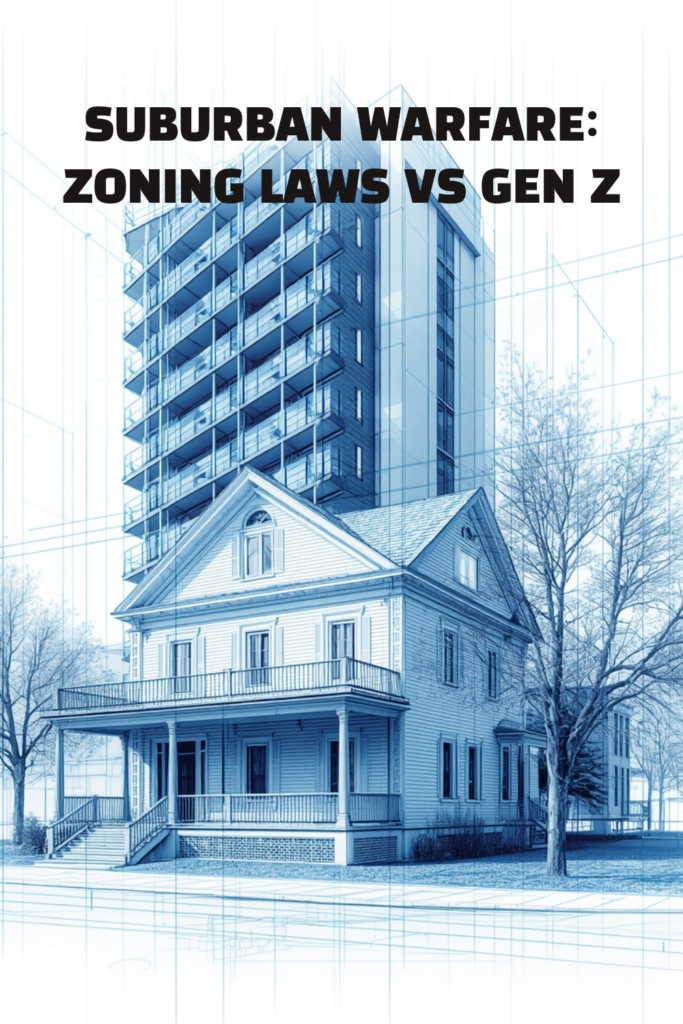
    When we look at the quiet, leafy streets of America’s classic single-family suburbs, we are not just looking at residential architecture. We are looking at a highly sophisticated legal shield engineered decades ago to preserve financial stability and neighborhood character. For the baby boomer generation, these peaceful enclaves represent the absolute crown jewel of their lifelong financial achievements. However, if we examine the rapidly shifting political landscape today, it becomes clear that this generational sanctuary is facing an unprecedented challenge. A rising, highly motivated coalition of young voters is actively confronting traditional Zoning Laws and Gen Z advocates are leading the charge to fundamentally dismantle the exclusive legal barriers that have historically insulated suburban property values.

    An architectural blueprint infographic showing the collision between high-density complexes and single-family zoning regulations.
    The political pressure to rewrite suburban zoning laws represents a primary structural flashpoint between younger voters and senior homeowners.

    The Generational Divide: Why Traditional Single-Family Boundaries Are Shifting

    To truly understand this friction, we need to understand how local land-use regulations actually operate. For nearly half a century, strict single-family zoning ordinances made it legally impossible to construct multi-family apartments, duplexes, or affordable townhomes within affluent suburban borders. This regulatory framework served the older generation incredibly well, naturally restricting housing supply while steadily inflating the market value of their existing properties. It created a beautifully predictable, low-density environment where home equity grew automatically year after year.

    But for the younger generation, this exact same protective framework looks like a structural economic barricade. With entry-level home prices reaching historic highs and interest rates remaining stubbornly restrictive, millions of young professionals find themselves permanently locked out of the property market. They look at the massive wealth accumulated by older homeowners and conclude that the current system is mathematically rigged against their survival. As a result, we are seeing a dramatic shift in local political participation. Young voters are no longer just complaining about rent prices; they are organizing at the municipal level to strip local town councils of their zoning authority, demanding high-density development inside the most pristine suburban zip codes.

    The Changing Regulatory Landscape: Legislative Overhauls and Shifting Values

    The legislative momentum across the country reveals a deliberate, state-level push to dismantle exclusive land-use protections.

    • The Pacific Accord: California’s sweeping legislative updates have effectively eliminated exclusive single-family zoning, allowing property owners to build multi-unit structures on lots previously reserved for a single home.

    • The Sun Belt Transition: Rapidly expanding metropolitan areas in Oregon and Washington have enacted comprehensive density mandates, forcing suburban communities to integrate high-density multi-family complexes.

    • The Urban Evaporation: Affluent older long-term residents are discovering that their highly localized public veto power over new commercial construction is being systematically overridden by state-level housing authorities.

    • The Institutional Conflict: As corporate developers align with youth activist networks to capitalize on massive high-density apartment projects, the traditional neighborhood aesthetic faces rapid transformation.

    The Real Estate Collision: Single-Family Protections vs. High-Density Integration

    This ongoing regulatory transformation creates a genuine dilemma for older homeowners who rely on neighborhood stability to anchor their retirement plans. It is easy to understand their perspective. When a high-density, multi-story apartment complex is constructed directly adjacent to a quiet cul-de-sac, the immediate local dynamic changes. The sudden influx of traffic, the strain on local school infrastructures, and the subtle shift in demographic density can create downward pressure on surrounding single-family valuations.

    This friction is exactly why we are seeing such a massive acceleration in the Red State Migration and a flight from volatile regulatory environments. Seniors are realizing that the legal protections they thought were permanent are actually highly vulnerable to local legislative updates. According to historical housing allocation data managed by the National Association of Home Builders [NAHB Economics and Housing Policy Data], the friction over local zoning boundaries has become the single greatest driver of suburban demographic realignments over the past decade, proving that the struggle for space is fundamentally a struggle for financial survival.

    [Expert Analytical Insight: The Deceptive Economics of Enforced Density]

    When we analyze the arguments put forward by high-density housing advocates, they frequently rely on a beautiful, compassionate promise: that destroying traditional zoning laws will naturally create affordable housing for everyone. However, if we look closely at the actual market outcomes, we discover a much more complicated reality. When a city eliminates single-family zoning, it does not magically lower land values; it actually increases them. Corporate real estate syndicates and private equity groups quickly sweep in to buy up modest suburban homes, demolish them, and construct luxury rental units that generate maximum corporate yields.

    The structural danger for both generations is that this aggressive push for density ultimately serves the interests of institutional Wall Street capital far more than it helps young home buyers. Instead of helping the younger generation build true generational wealth through property ownership, it converts them into a permanent class of corporate renters. Meanwhile, it systematically diminishes the quality of life and asset security of the older citizens who spent a lifetime paying off their homes. It is a highly sophisticated economic illusion, packaged as progressive generational equity but executing a massive wealth transfer into the hands of unelected financial institutions.

    Connecting Zoning Battles to the 2026 Congressional Standoff

    The escalating friction over national housing mandates and local community independence continues to serve as a primary structural element defining contemporary congressional polarization. The fundamental constitutional argument over whether the federal government should tie local infrastructure grants to mandatory high-density zoning compliance remains a critical point of legislative gridlock.

    The structural control of the upcoming legislative chambers dictates whether local communities retain their historic independence or face absolute compliance with federal housing mandates. As heavily detailed in our primary analytical index evaluating the upcoming [US Midterm Elections 2026], the contemporary congressional battles over infrastructure funding and community development block grants are a direct continuation of these localized land-use wars.

    Furthermore, the structural gridlock surrounding modern urban development legislation remains heavily driven by procedural tools like the Senate supermajority rule, a mechanism thoroughly analyzed in our report on [What is Filibuster].

    Conclusion: The New Definition of Suburban Stability

    Ultimately, navigating the complex realities of modern suburban real estate requires us to look past superficial generational talking points. The protective legal frameworks that built the mid-century middle class are cracking under the weight of modern economic imbalances. By analyzing both the legitimate financial anxieties of younger citizens and the hard-earned asset protections of older property owners, we gain a clear, unvarnished insight into the real, delicate mechanics of modern economic power.

  • Blue State Property Tax: How Punitive Levies Dissolve Boomer Wealth

    The traditional paradigm of homeownership in the United States once promised an absolute structural terminal point: clear the mortgage, secure the deed, and enjoy permanent insulating stability on inherited soil. However, evaluating the contemporary municipal financial strategies within progressive jurisdictions exposes this ideal as a dangerous legal fiction. Affluent senior citizens residing in coastal metropolitan belts increasingly discover that under the expanding regime of the Blue State Property Tax, one never truly owns their real estate. Instead, they are merely renting their generational property from predatory local government agencies that utilize escalating assessments as an automated cash-generation mechanism.

    “A property tax that compounds alongside speculative inflation is not a civic contribution; it is a slow-motion administrative foreclosure targeting fixed-income asset holders.”

    The Unending Leash: The Structural Extraction of Generational Equity

    The central structural pathology governing progressive fiscal policy is the mandatory reliance on unearned real estate appreciation to capitalize bloated municipal liabilities. In states like New Jersey, New York, and Illinois, property assessments are aggressively calibrated to regional market peaks. For a baby boomer living on a defined pension or fixed social security distribution, a sudden 15% spike in local property assessments translates directly into thousands of dollars in unbudgeted annual cash outflows.

    This relentless extraction forces seniors into a state of permanent economic insecurity. The administrative state effectively penalizes citizens for maintaining well-kept, multi-generational neighborhoods. When the cost of simply occupying a fully paid-off residence surpasses the original monthly mortgage payments of the 1980s, the property transforms from an asset into a toxic financial liability. This punitive mechanism explains the massive velocity of the ongoing Red State Migration, as aging wealth owners realize their lifelong equity is being systematically confiscated to balance collapsing public union pension funds.

    The Mathematics of Confiscation: Local Levies and Senior Depletion

    The local real estate dynamics across progressive strongholds reflect a calculated, policy-driven extraction that fractures middle-class wealth preservation.

    • The Garden State Paradigm: New Jersey continuously maintains the nation’s highest effective real estate tax rate, frequently exceeding an average of 2.4%, forcing thousands of fixed-income seniors into involuntary downsizing cycles.

    • The Empire State Escalation: New York’s sophisticated local assessment formulas create immense volatility, forcing long-term residents to fund expansive, unvetted urban social programs.

    • The Recapture Trap: Progressive legislators continuously attempt to pass specialized wealth surtaxes and exit levies designed to penalize affluent citizens who attempt to transfer their liquidity out of state jurisdiction.

    • The Safety Net Collapse: As critical property revenues are redirected to manage structural municipal deficits, basic localized infrastructure and suburban public safety networks face severe operational decay.

    The Illusion of Protection: Prop 13 Under Siege and the New Assessment Front

    Even in jurisdictions where historical legislative barriers were specifically engineered to protect long-term property owners, the administrative class is actively executing covert workarounds. In California, the historic legacy of Proposition 13 has spent nearly fifty years capping property tax increases to a predictable 2% annual metric based on the original acquisition cost. For the boomer generation, this statute served as a supreme legal shield against displacement.

    However, the modern progressive apparatus has successfully bypassed these barriers by aggressively implementing localized “special assessments,” municipal bonds, and targeted parcel taxes that operate completely outside the protective boundary of Prop 13. According to official administrative policy databases hosted by the United States Census Bureau [US Census Bureau Public Finance Records], these micro-levies are expanding at an unprecedented velocity, covertly shifting billions in infrastructural costs directly onto the shoulders of senior homeowners, proving that an insulated legislative majority will always find a path to breach constitutional asset protections.

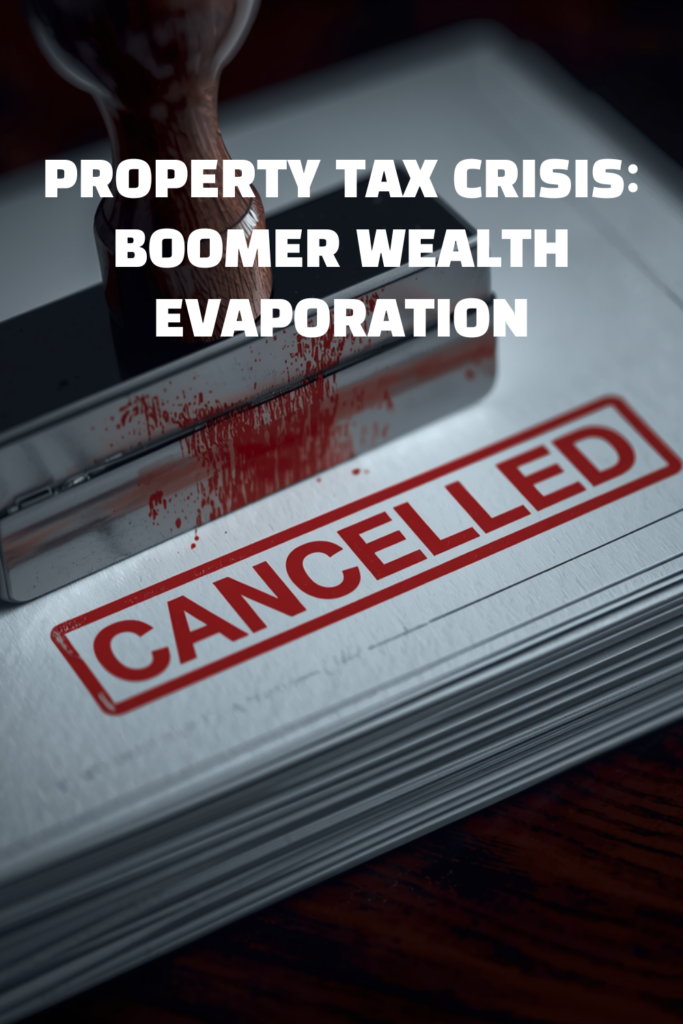
    A dramatic professional infographic detail of a metallic stamp and cancelled property deeds illustrating the Blue State Property Tax crisis.
    High property taxes in progressive states function as a major catalyst for the displacement of long-term senior homeowners.

    [Expert Analytical Insight: The Predatory Nature of Technocratic Compassion]

    The contemporary progressive political establishment continuously defends high localized property taxes under the banner of civic compassion and educational equity, yet this moralizing rhetoric masks a deeply predatory institutional mechanism. They operate under the naive, arrogant assumption that a government agency possesses a superior moral right to an individual’s accumulated real estate equity than the family that sacrificed to build it. This is a system that views homeownership not as a fundamental human right or a pillar of family stability, but as an unceasing, automated automated ATM to fund technocratic administrative expansion.

    The systemic hazard for the modern electorate is that this model of technocratic compassion ultimately hollows out the very communities it claims to preserve. When you make it financially impossible for a grandfather to pass a fully paid-off home down to his grandchildren without triggering an catastrophic tax reassessment, you destroy the organic continuity of neighborhoods. Electorates continuously validate these hyper-inflated local bond measures based on emotional public school marketing campaigns, completely blind to the reality that the vast majority of the capital is swallowed by bureaucratic management networks, leaving the elderly population to face economic eviction under the guise of progress.

    Connecting Tax Realignment to the 2026 Congressional Standoff

    The massive polarization surrounding interstate tax equity and localized property mandates continues to serve as the primary legal fuse defining contemporary congressional polarization. The fundamental constitutional fight over whether to remove or expand the federal State and Local Tax (SALT) deduction cap remains a primary economic battle line between high-tax coastal enclaves and low-tax southern jurisdictions.

    The structural control of the upcoming legislative chambers dictates whether northern municipalities receive a federal tax cushion or face absolute fiscal exposure. As heavily detailed in our primary analytical index evaluating the upcoming [US Midterm Elections 2026], the contemporary congressional battles over tax codes and infrastructure capitalization are a direct, uninterrupted continuation of the structural precedents established by these localized property wars.

    Furthermore, the persistent gridlock surrounding federal revenue distributions remains heavily driven by procedural tools like the Senate cloture threshold, a mechanism thoroughly analyzed in our report on [What is Filibuster].

    Conclusion: The Eviction of the Middle Class

    Ultimately, decoding the legacy of the Blue State Property Tax mandates an absolute willingness to reject sanitized public relations hagiography. The progressive model of unchecked local expenditure is actively converting the American dream of secure homeownership into a permanent, government-controlled lease agreement. By analyzing both the immense revenue targets captured by these coastal administrations and the severe financial displacement inflicted upon the elderly, the public discards a flat caricature to discover the real, unvarnished machinery of American economic power.
  • Red State Migration: Why Boomers Are Fleeing to Tax Havens

    The modern demographic landscape of the United States is undergoing a silent, structural partition driven not by ideological warfare, but by the raw, calculated math of asset preservation. For decades, elite metropolitan centers within blue states long established absolute economic and cultural hegemony. However, evaluating the unvarnished migration data of the mid-2020s exposes a profound structural exodus. Millions of wealthy American baby boomers are systematically liquidating their lifelong assets to participate in what political analysts term the Red State Migration. This is not a simple choice of retirement leisure; it is a desperate, aggressive flight from punitive local fiscal regimes that are actively hollow-out working-class and senior home equity.

    “The Great American Exodus is not driven by geographic nostalgia; it is a cold, calculated strike against the administrative overreach of domestic tax sanctuaries.”

    A dramatic professional infographic detail of a financial ledger and a moving truck silhouette illustrating the Red State Migration.
    The Red State Migration represents a massive, multi-billion-dollar reallocation of American boomer wealth and real estate equity.

    The Fiscal Siege: Why Blue State Governance Fractures Senior Wealth

    The core operational motivation pushing the 50-plus demographic past their breaking point is the systematic weaponization of localized property and income taxes. In states like California, New York, and Illinois, the political establishment continuously funds expansive, bureaucratic social programs by accelerating the tax burden on fixed-income property owners. For a senior citizen who spent forty years clearing a mortgage, remaining in their generational home has transformed into an unsustainable financial liability.

    The structural trauma is heavily compounded by an ongoing erosion of local infrastructure and public safety perimeters. When an administrative state mandates historic tax increases while simultaneously failing to secure basic urban stability or contain local inflation, the social contract fundamentally dissolves. The wealthy boomer generation, possessing the absolute highest concentration of domestic liquid capital, refuses to allow their legacy assets to be consumed by collapsing municipal budgets. Consequently, they are deploying their capital as a geopolitical weapon, transferring entire banking grids to deregulated southern territories.

    The Math of Flight: Structural Realities and Geographic Winners

    The administrative realignments created by this capital migration have permanently altered the baseline economics of local real estate markets across the American Sun Belt.

    • The Florida Influx: Successfully absorbed over $39 billion in adjusted gross income within a single fiscal period, utilizing an absolute absence of state income taxes to capture the nation’s elite managerial class.

    • The Texas Enterprise Expansion: Systematically dismantled local corporate barriers, leveraging cheap land architectures and pro-business zoning laws to attract multi-generational family trusts.

    • The Domestic Supply Collapse: The sudden evaporation of affluent taxpayers has forced northern municipalities into a dangerous fiscal spiral, prompting even more aggressive tax hikes on the captive population left behind.

    • The Infrastructure Strain: Paradoxically, the massive velocity of the migration has triggered severe localized inflation within target red states, skyrocketing home insurance premiums and straining suburban power grids.’

    The Suburban Battlefield: Home Equity and the New Red Gentrification

    The geopolitical consequences of this demographic shift extend far beyond simple interstate moving vans; they are actively reshaping the physical boundaries of suburban real estate. As affluent retirees flood into target locations like the Boise suburbs, the absolute volume of cash-rich offers has effectively priced out the local working-class population. A boomer selling a modest, two-bedroom suburban home in Long Island can easily leverage that equity to purchase a sprawling, custom-built estate in the South with substantial liquid capital left over for private wealth accounts.

    This massive capital disparity creates a profound, localized resentment. The influx of northern wealth systematically drives up local property assessments, meaning native residents face sudden, unexpected spikes in their own tax burdens simply because wealthy retirees chose their zip code as a financial refuge. According to official historical housing registries and infrastructure spending metrics archived by the United States Department of Housing and Urban Development [HUD Official Housing Archives], this dynamic of “red gentrification” is creating an entirely new matrix of local legislative polarization, proving that escaping a fiscal crisis in one state frequently breeds a secondary economic conflict in the next.

    [Expert Analytical Insight: The Delusion of Progressive Tax Sanctuaries]

    The contemporary progressive political establishment routinely dismisses this historic migration as a minor, narrative fabrication advanced by conservative media networks, yet this dismissive posture exposes a profound structural blind spot. They operate under the naive, ideological delusion that high-income earners and asset-rich seniors will passively allow themselves to be utilized as permanent, automated funding mechanisms for administrative inefficiency. Capital is inherently fluid, and human beings will always default to survival frameworks when they perceive that their lifelong material security is being compromised.

    The systemic hazard for modern democratic governance is that this ideological blindness accelerates the absolute polarization of the nation. When blue states double down on punitive fiscal measures to cover the deficits left by fleeing taxpayers, they ensure the total structural decay of their own economic base. Meanwhile, red states risk transforming into hyper-stratified, corporate enclaves where the cost of basic survival escalates beyond the reach of the native working class. Electorates continuously mistake this structural migration for a simple red-versus-blue cultural debate, completely blind to the reality that it is a raw, transactional resource war orchestrated by an insulated managerial elite.

    Connecting Demographic Shifts to the 2026 Legislative Horizon

    The profound real estate realignments and state-level policy warfare initiated by this demographic exodus continue to serve as the primary legal coordinates defining contemporary congressional polarization. The fundamental constitutional question of whether the federal government can intervene to standardize interstate tax competitions or restrict localized property zoning mandates remains a vital flashpoint.

    The structural control of the upcoming legislative chambers dictates whether these historical local oversights face severe federal checks or receive total state-level autonomy. As heavily detailed in our primary analytical index evaluating the upcoming [US Midterm Elections 2026], the contemporary congressional battles over state and local tax (SALT) deduction caps and national housing funding are a direct, uninterrupted continuation of the structural precedents established by this economic migration.

    Furthermore, the persistent legislative gridlock surrounding modern suburban zoning reforms remains heavily driven by procedural tools like the Senate supermajority rule, a mechanism thoroughly analyzed in our report on [What is Filibuster].

    Conclusion: The Realignment of the American Dream

    Ultimately, evaluating the legacy of the Red State Migration mandates an absolute willingness to separate superficial political rhetoric from grim macroeconomic data. The baby boomer generation is executing a brilliant, ruthlessly pragmatic survival strategy to insulate their retirement assets from structural administrative decay. By exploring both the majesty of the Sun Belt real estate boom and the severe structural deficits left in the Rust Belt, the public discards a flat, partisan caricature to discover the real, unvarnished machinery of American economic power.

  • Second Amendment Gun Control Debate: Fatal Truths Revealed

    Second Amendment Gun Control Debate: Fatal Truths Revealed

    Second Amendment Gun Control Debate has reached a fever pitch in 2026 as mass shootings continue to plague schools, offices, and public parks. While the world looks on in horror, the United States remains locked in a constitutional stalemate. The core of the issue lies in the interpretation of the Second Amendment: Is it an archaic relic or a fundamental right to self-preservation?

    A comprehensive table comparing the pro-gun and anti-gun logic within the Second Amendment Gun Control Debate in 2026.
    The core logic of the US Gun Control debate.

    📊 Comparison: The Logic of the Gun Divide

    To understand why this issue is so polarized, we must look at the fundamental arguments driving each side of the Second Amendment Gun Control Debate.

    Category Pro-Gun Rights (Conservative/GOP) Pro-Gun Control (Liberal/Dem)
    Core Philosophy Guns don’t kill people; people kill people. Access to lethal weapons is the primary catalyst for mass violence.
    Constitutional Basis “The right of the people to keep and bear arms shall not be infringed.” “A well regulated Militia” implies collective, not absolute individual, rights.
    Safety Logic The only way to stop a bad guy with a gun is a good guy with a gun. Fewer guns in circulation directly correlate to fewer fatal accidents and crimes.
    Primary Solution Mental health reform and increased security (armed guards) in schools. Universal background checks, red flag laws, and bans on assault weapons.

    Why the Root Cause Remains Unresolved

    Experts suggest that the focus on the Second Amendment Gun Control Debate often ignores the socio-economic factors that fuel violence. However, as noted in our [US City Crime Rates 2026] , the sheer volume of firearms makes any intervention difficult.

    • Digital Radicalization: The influence of social media, as discussed in [Gen Z Political Leanings] , often pushes marginalized individuals toward extreme acts of violence.

    • Legislative Gridlock: The [2026 Midterm Elections Checklist] shows that gun rights remain a “third rail” for many politicians who fear the lobby’s influence.

    The Role of Education and Prevention

    Is education the missing piece? Many experts argue that while we debate the Second Amendment Gun Control Debate, we fail to implement standardized survival training.

    1. Safety Training: Mandatory firearm safety courses for all potential owners.

    2. Crisis Response: Implementing “Run, Hide, Fight” education in every workplace and school, similar to fire drills.

    3. Mental Health Screening: Moving beyond simple background checks to more comprehensive psychological evaluations, a move often blocked by the [Supreme Court Conservative Majority].

    According to the official Bureau of Alcohol, Tobacco, Firearms and Explosives (ATF) data  [ATF Gun Data], the number of untraceable “ghost guns” recovered at crime scenes has tripled since 2024, making regulation even more complex.

    Conclusion: A Superpower’s Internal War

    The Second Amendment Gun Control Debate is a reflection of a nation that values individual liberty over collective security—or perhaps a nation that has forgotten how to differentiate the two. Until we move past the “all or nothing” rhetoric, the cycle of violence will continue. We are still a long way from a safe America, and as long as guns are easier to obtain than quality mental healthcare, the tragedy will repeat itself.


    🎙️ Expert Commentary: The Education Gap in a Violent Society

    “We are witnessing a fatal disconnect in American society. While the Second Amendment Gun Control Debate rages in courtrooms, our citizens are left defenseless in the streets. Proponents of gun ownership argue for the right to self-defense, yet we offer almost zero standardized education on how to prevent or survive a shooting. If we cannot ban the weapon, we must at least master the prevention. The ultimate solution isn’t just about changing the law; it’s about changing our culture’s relationship with violence. Unfortunately, in 2026, we are still choosing political slogans over human lives.”

  • Supreme Court Conservative Majority: Shocking 20-Year Rule

    Supreme Court Conservative Majority: Shocking 20-Year Rule

    📂 Essential Legal Glossary for Readers

    Before diving into the analysis, it is crucial to understand the legal mechanisms that allow the Supreme Court Conservative Majority to reshape the nation.

    • Stare Decisis: A Latin term meaning “to stand by things decided.” It is the principle that the court should follow past precedents. The current court, however, has shown a willingness to overturn long-standing rulings.

    • Originalism: A concept of legal interpretation that asserts the Constitution should be interpreted as it was understood at the time of its adoption. This is the primary tool used by conservative justices to limit federal power.

    • Judicial Activism: When judges allow their personal or political views to influence their legal decisions. While traditionally associated with liberal courts, it is now a term used to describe the current court’s aggressive overturning of established laws.


    Supreme Court Conservative Majority has effectively become the ultimate arbiter of American life, possessing the power to steer the national ship for the next two decades. With a solid 6-3 conservative split, the highest court in the land is no longer just interpreting laws; it is fundamentally rewriting the American social contract.

    A graphic analysis of the Supreme Court conservative majority and its long-term impact on US legal values in 2026.
    The future of US Law under the Supreme Court Conservative Majority.

    Who Chooses the Gatekeepers?

    The composition of the Supreme Court is determined by the President of the United States and confirmed by the Senate. This is why the  [2026 Midterm Elections Checklist]  is so vital. When a conservative administration holds power, they select young, ideologically rigid judges who can serve for 30 to 40 years. This ensures that even if a liberal President takes office later, their executive orders can be systematically dismantled.

    Two Administrations, Two Destinies

    • The Conservative Stance: Views the court as a bulwark against “woke” ideology. They appoint judges who favor deregulation and religious freedom, often citing the [Gen Z Political Leanings]  shift as a mandate.

    • The Liberal Stance: Sees the current Supreme Court Conservative Majority as an existential threat to civil rights and reproductive freedom. They argue the court has abandoned neutrality.

    Reviewing the Past: Was the Law Correct?

    The most controversial aspect of the current court is its willingness to re-examine “settled” law. By questioning whether past rulings—like the protection of federal agency power—were fundamentally flawed, the court is creating a legal vacuum. This judicial review process often ignores the “Stare Decisis” principle, leading to a volatile environment.

    This instability echoes the economic uncertainty we discussed regarding the  [Federal Reserve Chair Appointment Crisis], where institutional trust is traded for political gain.

    The 20-Year Ideological Shift

    What does a 20-year conservative reign look like?

    1. Dismantling the Administrative State: Federal agencies will lose their power to regulate everything from carbon emissions to [TikTok Ban Legal Timeline].

    2. Expansion of Gun Rights: The interpretation of the Second Amendment will likely widen, impacting [US City Crime Rates 2026].

    3. Economic Protectionism: Legal backing for trade strategies like [US China Trade War Tariffs]  will be solidified.

    According to the official Supreme Court of the United States records  [SCOTUS Opinions], the current term features an unprecedented number of cases that challenge decades of established precedent.


    🎙️ Fact-Check Commentary

    “Is the law truly equal? The current court is attempting to immortalize a specific partisan value system under the guise of ‘Rule of Law.’ While claiming to correct ‘past mistakes’ in judicial history may sound noble, it often masks a reality where nine elite legal technicians are designing a version of America that ignores the diversity of 300 million citizens. We must remain vigilant against the use of ‘Originalism’ as a tool to reverse the progress of time.”