Tag: Voting Rights

  • Electoral College 2026: The Ultimate Guide to 270 Votes

    Electoral College 2026: The Ultimate Guide to 270 Votes

    Electoral College 2026: The Ultimate Guide to Understanding the 270 Vote Threshold

    The Electoral College remains the most critical yet misunderstood component of American democracy. As we look toward the 2026 Midterm Elections, understanding the Electoral College is not just an academic exercise—it is a strategic necessity for grasping how American power is won and maintained. This system continues to dictate the rhythm of national campaigns and the distribution of political influence across the 50 states. To gain a broader perspective on national voting patterns, you should first examine the [Ohio Primary 2026 Insights]  which provides a baseline for current voter behavior.
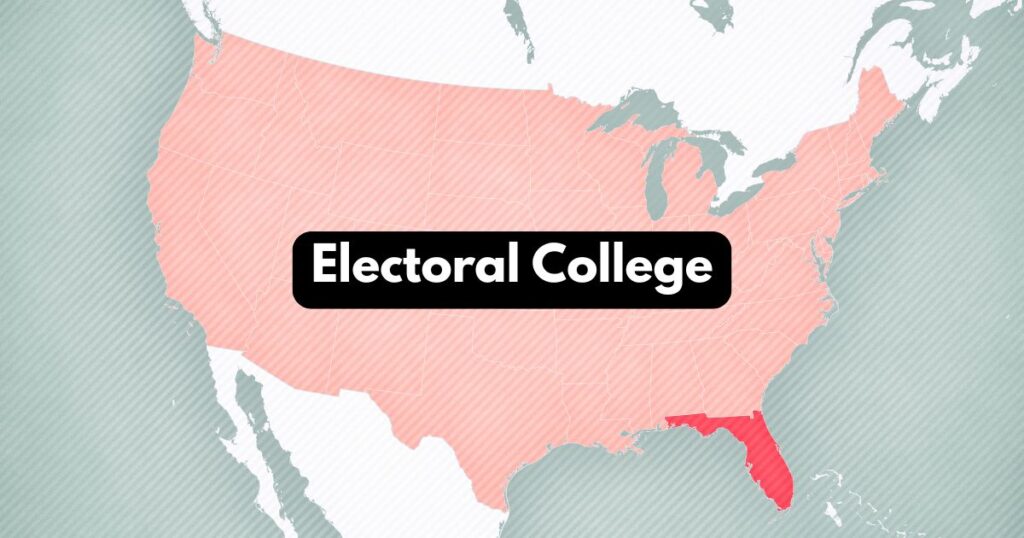
    A detailed 2026 US map explaining the Electoral College and the 270 vote threshold.
    Securing 270 votes in the Electoral College is the ultimate goal.

    The Mechanics of the Electoral College and the 538 Electors

    The Electoral College is composed of 538 electors, a number that reflects the total membership of the U.S. Congress. To secure the presidency, a candidate must win a majority of at least 270 electoral votes. Each state’s number of electors is determined by its total congressional representation: two senators plus the number of its members in the House of Representatives.

    How Elector Allocation Works in 2026

    This formula ensures that every state, regardless of population, has a minimum of three electoral votes. In 2026, the census-driven reapportionment of these seats continues to shift the political gravity toward the Sun Belt, altering the traditional electoral map. This shift is a key reason why candidates focus so heavily on regional economic data. For more on the economic drivers of voter sentiment, see our analysis on the  [2026 CPI Data Analysis].

    The Winner-Take-All System and Swing States

    Most states employ a “Winner-Take-All” system for the Electoral College, where the candidate who wins the popular vote plurality receives all of that state’s electoral votes. This reality is why national campaigns focus disproportionately on a handful of “Swing States” like Pennsylvania, Michigan, and Arizona.

    Strategic Impact of the Electoral College on 2026 Midterms

    While the Electoral College specifically elects the President, its shadow looms over the 2026 Midterm Elections. The boundaries of electoral influence are often shaped by economic and social factors that influence voter sentiment. According to the official  [U.S. National Archives on Electoral College] , this institution was designed to balance the interests of high-population and low-population states.

    Economic Factors and the Electoral College

    The economy remains the top priority for voters in battleground states that decide the Electoral College. The latest inflation data is a critical variable in how these states might lean in the next cycle. Candidates must align their fiscal platforms with the specific needs of these diverse voting blocs to maintain structural “Stability.”

    The Role of State Legislatures in Electoral College Reform

    State-level decisions on how elections are conducted can have ripple effects on the Electoral College. Understanding the legislative framework of these states is vital for recognizing the long-term trajectory of U.S. policy and the defense of democratic institutions. Many states are currently debating the “National Popular Vote Interstate Compact,” which could fundamentally change the Electoral College without a constitutional amendment.

    The Global Debate: Popular Vote vs. Electoral College

    One of the most persistent criticisms of the Electoral College is the possibility of a candidate winning the national popular vote but losing the presidency. This phenomenon remains a flashpoint for debates over democratic integrity in 2026.

    Proponents of the Current Electoral College System

    Proponents argue that the Electoral College preserves federalism and prevents high-population states from monopolizing the executive branch. They believe it forces candidates to build a geographically diverse coalition, maintaining the “Character” of the United States as a union of states rather than a single direct democracy.

    Arguments for Electoral College Reform

    Critics suggest that the Electoral College diminishes the “Human Factor” of individual votes in non-competitive states. They often advocate for reforms that would align the presidency more closely with the direct will of the people. This debate continues to shape the legislative agendas of both major parties as they prepare for the 2026 cycle.
  • 2026 US Midterm Elections: Dates, Early Voting, and the Integrity Debate

    The Road to November: Navigating the 2026 US Midterm Elections

    As the United States approaches the 2026 Midterm Elections, the atmosphere is charged with both democratic fervor and structural skepticism. For voters, activists, and political engineers alike, understanding the logistics of the vote is only the first step. The deeper challenge lies in navigating the complex discourse surrounding election integrity and the legislative frameworks that govern our democracy.

    A close-up of a voter's hand placing a ballot into a secure box, symbolizing the integrity of the 2026 elections.
    A visual breakdown of 2026 voting dates alongside the key pillars of election integrity.

    1. Key Dates and Logistics: When and Where to Vote

    The 2026 Midterm Elections are constitutionally mandated to take place on Tuesday, November 3, 2026. However, the “Election Day” concept has evolved into an “Election Season” in many states.

    • Early Voting Periods: Depending on the state, early in-person voting typically begins 15 to 30 days before Election Day. For 2026, many jurisdictions will open their polls as early as October 5-10, 2026.

    • Mail-in and Absentee Ballots: Application deadlines for mail-in ballots often fall in late October. Experts suggest checking local Secretary of State websites for specific county-level deadlines, as these are governed by state-specific statutes.

    • Polling Locations: Voters can typically find their designated polling place through the Official Government Portal (Vote.gov). This logistical infrastructure is a primary focus of federal funding, often discussed in the context of the [DHS Funding Bill], as DHS plays a critical role in securing the physical and digital aspects of the vote.

    2. The Election Integrity Debate: A Comparative Analysis

    The debate over “election integrity” versus “voter suppression” has become a central pillar of modern political engineering. To understand this conflict, one must look at the objective arguments presented by legal scholars and political scientists.

    Perspective A: The Push for Enhanced Security (The Integrity Advocates)

    Proponents of stricter voting laws argue that the current system is vulnerable to exploitation. Their concerns often focus on:

    • Voter Identification: Advocates argue that universal ID requirements are the only way to prevent impersonation fraud.

    • Chain of Custody for Ballots: There is a significant focus on the security of drop boxes and the “harvesting” of mail-in ballots.

    • The Role of Technology: Much like the concerns surrounding [AI Deepfake Election Law] , this group fears that digitized voting systems are prone to foreign interference or algorithmic manipulation.

    Perspective B: The Argument for Expanded Access (The Voting Rights Advocates)

    Conversely, many scholars, citing peer-reviewed research from institutions like the MIT Election Data and Science Lab (MEDSL), argue that documented cases of widespread voter fraud are statistically “microscopic.” Their focus remains on:

    • Systemic Access: They contend that strict ID laws and the removal of mail-in options disproportionately affect marginalized communities.

    • The “Paper Trail” Defense: Experts in this camp point to the fact that modern US elections utilize auditable paper trails, making large-scale “hacking” of results nearly impossible without detection.

    • Institutional Trust: They argue that the primary threat to democracy is not the fraud itself, but the rhetoric of fraud, which erodes public trust in the [US Legislative Process] .

    3. The Influence of Judicial and Media Narratives

    The interpretation of “integrity” is often shaped by the voices that dominate the media landscape. Legal analysts like [Jeanine Pirro] often highlight the potential for localized fraud, driving a narrative that encourages voters to be hyper-vigilant. This media pressure often leads to landmark court cases, such as those involving  [Supreme Court Texas Redistricting], where the very lines of the district are contested as a form of “legalized” election manipulation.

    Furthermore, the influence of private interests cannot be ignored. Large agencies, exemplified by a [CAA Agent], often represent high-profile figures who use their platforms to swing public opinion on these very laws, demonstrating that cultural power is now inextricably linked to electoral outcomes.

    Conclusion: A Vigilant Electorate

    Whether one prioritizes “security” or “access,” the 2026 Midterm Elections will be a defining moment for the American republic. The survival of the system depends on a transparent budget, as outlined in the [US Federal Budget Cycle] , and a commitment to facts over rhetoric. At [US Political Insight], we remain committed to providing the data and the context needed to navigate this unprecedented era of American politics.

  • SCOTUS and Texas Redistricting: A 2026 Shift

    The Supreme Court and the Battle for Texas: Redistricting in 2026

    The redistricting process in Texas has long been a contact sport, but as we approach the 2026 cycle, the stakes have never been higher. With the U.S. Supreme Court (SCOTUS) increasingly taking a hands-off approach to partisan gerrymandering, the Lone Star State has become the ultimate laboratory for political engineering. This isn’t just about drawing lines on a map; it’s about the fundamental architecture of American power for the next decade.

    Map of Texas with a judge's gavel symbolizing the Supreme Court redistricting case.
    The Supreme Court’s decision on Texas maps will shape the 2026 elections.

    The Legal Landscape: SCOTUS and the Voting Rights Act

    For years, Section 2 of the Voting Rights Act served as a shield against discriminatory redistricting. However, recent rulings from the conservative-leaning Supreme Court have signaled a shift. The Court’s focus has moved toward a stricter interpretation of “racial gerrymandering” versus “partisan gerrymandering.” In Texas, where demographics are shifting rapidly, this distinction is where the 2026 election will be won or lost. [Strategic DHS Funding Analysis]

    Texas as the Epicenter of Political Engineering

    Texas gained more congressional seats than any other state following the last census. The way these districts are drawn determines the balance of power in the House of Representatives. Republican strategists are looking to fortify existing strongholds, while Democrats are banking on the growing suburban “Blue Wave” to break through the gerrymandered lines.

    The Suburban Shift and Redistricting Reality

    The most fascinating aspect of Texas redistricting is the evolution of the suburbs. Places like Collin County and Fort Bend County are no longer the GOP bastions they once were. Political engineers are now tasked with “cracking and packing”—dividing liberal-leaning suburban voters into multiple conservative districts or packing them all into one to dilute their overall influence.

    The 2026 Midterm Fallout

    As we look toward the 2026 ballot box, the SCOTUS rulings on Texas maps will provide the final ground rules. If the current maps stand, the path to a House majority for either party runs directly through the I-35 corridor. Analysts suggest that even a minor tweak to a few key districts in San Antonio or Dallas could result in a 3-to-5 seat swing at the federal level. [2026 Midterm Elections]

    Conclusion: A Decade of Influence

    Redistricting is the ultimate “invisible” power. While voters focus on candidates, the engineers focus on the boundaries. The Supreme Court’s role as the final arbiter ensures that their influence will be felt long after the 2026 elections are over. At US Political Insight, we will continue to track how these legal battles redefine the American electorate.